

Frequently Asked Questions about Nyungwe National Park.
Frequently asked questions about Nyungwe National Park.
Nyungwe sits on the southern Western border of Rwanda and has around 1019 sq km of tropical wooded area. This wooded area runs from the Nile basin east to the River Congo basin in the west.
Together with African Parks in 2004, the park came under government (Rwanda Development Board) protection. With 13 primate species, including chimpanzees, Dent’s Mona monkeys, Angola colobus, silver monkeys, and blue monkeys, to name just a few, Nyungwe National Park’s exceptional biodiversity makes it special.
The park is home to around 275 bird species, including some threatened Albertine endemics such as Grauer’s Warbler, Kungwe Apalis, and many more.
Rising over 3000 meters above sea level, the Park offers habitat to over 85 animals and more than 38 reptiles.
How To Reach Nyungwe National Park By Road
From Kigali Airport, a vehicle drive to the Park it takes five hours or so with optional stopovers. Among them are the National Museum, Nyinza palace in Nyabisindu house for the previous monarch of Rwanda, Gikongoro Genocide Memorial, and many more.
By Aviation
Rwanda Air provided charter flights from Kigali airport to Nyungwe National Park upon demand and before booking.
Activities Available at Nyungwe National Park
Trekking Chimpanzees in Nyungwe National Park
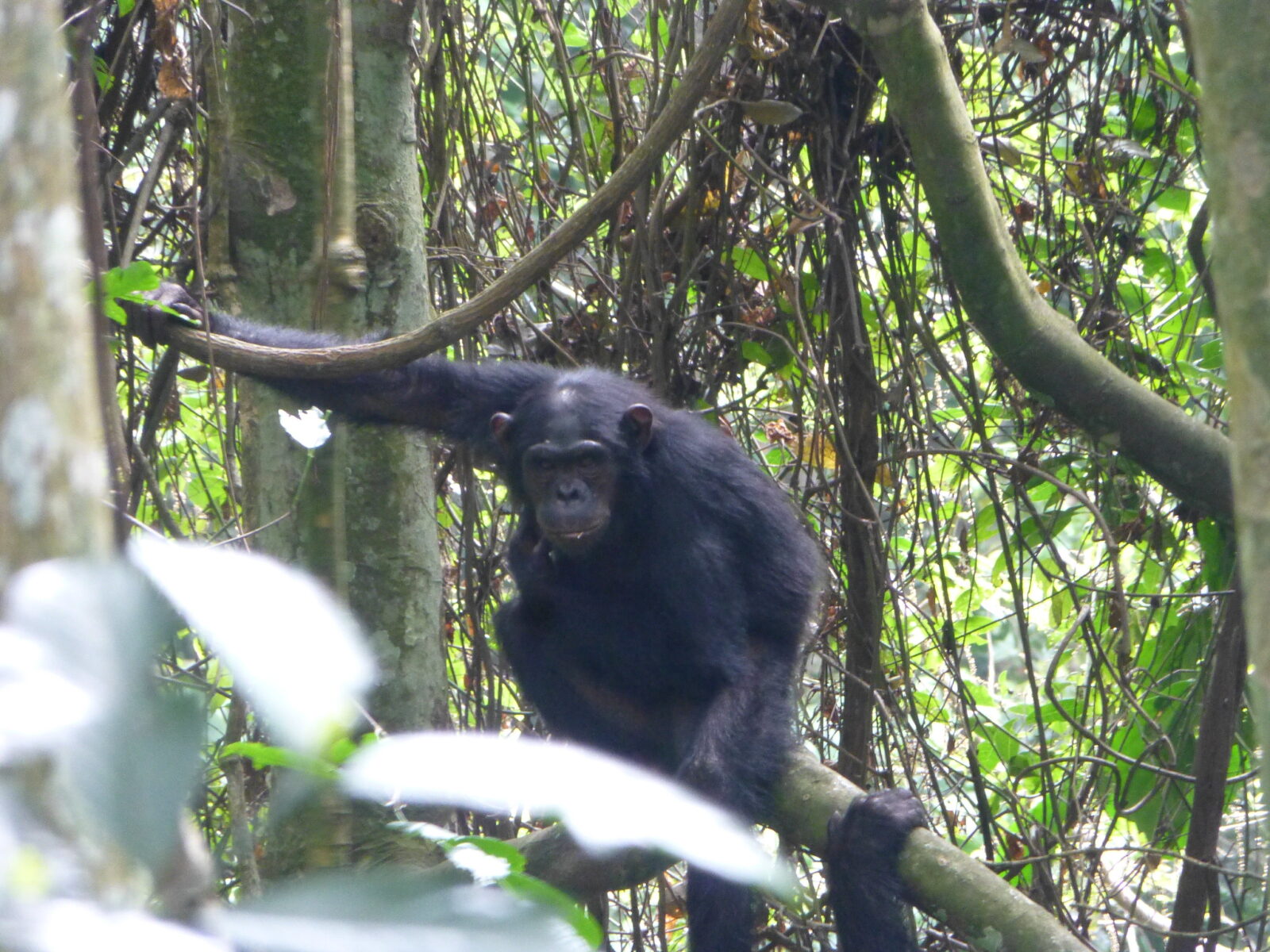
With two groups of Chimpanzees currently undergoing habituation, Chimpanzee trekking is the main activity in Nyungwe National Park. Though this section is on the edge of the park among a tea plantation and Eucalyptus trees, one group is in Uwinka while another is in Cyamudondo. Depending on their mobility, chimpanzee hiking here lasts two to three hours.
Because of its placement on steep hills, about thirty chimpanzees make up the tiny group housed in this part. Access to the Chimpanzees in Cyamudongo comes via Gisaku Reception Center, an hour’s drive on a rocky, sandy road.
Though these chimps are still experiencing habituation, the thrill of keeping on top of things even after you find the chimpanzees is a wonderful feeling that adventure lovers get. Although the chimpanzee permits are offered at the Rwanda Development boards for $90 per person each trip, they may also be purchased online and with current documentation before chimpanzee trekking.
Walk Over Nyungwe Forest in the Canopy
Rising around 50 meters above the forest canopy, a suspension bridge spans Nyungwe National Park for roughly 91 meters. Only Nyungwe National Park in all whole East Africa has this unique climb. From Uwinka, the main forest headquarters, the Igishigishigi path is around 90 minutes distant on the canopy walk.
Starting 0900hrs every day, the Canopy walk offers amazing views of the forest and tree-filled rolling slopes. Many birds are seen swooping over the vast canopy. From the canopy, many describe unique life-transforming events like proposals, birthday surprises, and much more.
Birding in the Nyungwe National Park
A Nyungwe Forest National Park birding trip would be well worth adding to a Rwandan travel schedule. On the Albertine graben, this tropical forest has a suitable habitat to sustain a rich birdlife.
Among the Albertine endemics you could see on your Rwanda birding trip are Shelley Crimson-wing, Kungwe Apalis, Rwenzori Turaco, White-tailed Blue Flycatcher, Malachite Sunbird, and Dusky Turtle Dove.
Outdoor camping in Nyungwe National Park
Add to your must-do experience in Nyungwe National Park, staying in the midst of nowhere and listening to the forest. The camping area of the Uwinka Visitor Center allows you to set up tents, fall asleep with wild lullabies, and wake up to jungle bird cries.
The location has a wooden platform for tent pitching, a bonfire spot already established, toilet facilities, and restrooms.
Hike the Nature Trail
On a 4-hour to 3-day hike, Nyungwe National Park offers peaceful natural surroundings. The most difficult of the 130 km paths built up in the forest for trekking are Imbaraga, Congo Nile, and Igishigishigi.
To savor the times in the forest and save memories to turn over often, you must ready your hiking tools. A camera, trekking boots, energy bites, binoculars, and so much more.
Primate Walk.
Among the many monkey species found in Nyungwe National Park—including the Angolan Colobus monkeys, which no longer exist in Angola—Dent’s Mona monkey, Hamlyn’s monkey, Rwenzori colobus, red tailed monkey, golden monkey, silver monkey—are just a few.
Water Falls Visit
The forest serves as a water catchment region with many rivers running through it, producing spectacular waterfalls. The most remarkable is Kamiranzovu Waterfall; its name locally means “swallowing an Elephant”.
The Kamiranzovu Swamp that feeds the falls gives them their name. The falls are breathtakingly visible at the conclusion of nature walks.
Which lodging facilities does Nyungwe National Park offer?
Both within and outside Nyungwe National Park offer opportunities to appreciate its amazing beauty. There is a great variety of lodging options depending on your means. Their grades follow Luxury, Moderate, and Budget categories for lodging establishments.
Among the many lodging facilities in Nyungwe National Park are Nyungwe Top View Hill Hotel, Gisaku Guest House, Nyungwe Forest Lodge, Nyungwe House, Gisaku Family Hostel, and others.
The ideal time to visit Nyungwe National Park
Though the dry months of June through September are more colorful, Nyungwe National Park is available for guest visitation all year round. Because the ground is drier and routes are less obscured by undergrowth, the chimpanzee feeds nearer the ground.
Many birds in this park breed more during dry seasons, which increases opportunities for skilled birders to see many species. The park hosts a bird fiesta all day long as the birds are also busy building nests to see them through the rainy seasons.
What Should One Bring To Nyungwe National Park Safari?
Since Rwanda is usually a quite chilly hilly nation, most safari activities there involve trekking. For a safari in Nyungwe National Park, you must take the appropriate kit.
In damp locations, the soils are humid and slippery, hence hiking boots are more suited for usage on slopes with less challenge.
Two binoculars for improved perspective of far-ranging attractions such as birds, monkeys, chimpanzees, and others.
Insecticides to guard your body from stinging insects prowling the forest all day long.
Garden gloves can help you to grasp creepers more tightly, particularly on the way to find the chimpanzees in the Park.
A water bottle to carry drinking water for a forest’s tired hikers to rehydrate.
Toiletries beforehand in case your lodge or motel runs without
Ponchos are a great warm, rainproof garment as the forest is chilly, particularly during the rainy seasons.
Long-sleeved shirts and trousers as the woodland feature biting insects that could damage your skin.
A light water water-resistant bag can help to keep your things together and protected from dripping water from the leaves.
a camera to save experiences. And a fully charged extra battery to replace running low.
If you want to do any kind of transaction—buying souvenirs, hiring a porter, tipping, so much more—some cash to convert into local money.
The dos and don’ts of Nyungwe National Park
Chimpanzees are wild creatures who have to search for their own food; therefore, do not feed them.
Primate food from the forest comes from the plant; hence, spitting on it is forbidden.
Dumping wrappers or any other garbage disturbs the forest’s natural habitat, so no dumping should be done. Rwanda also supports ecotourism and rigorous rubbish disposal policies to help maintain the cleanliness of the environment as found there.
Ask the ranger guide to dig a hole for you around thirty meters deep and hide everything beyond recognition should you choose to ease yourself.
Eat nothing and smoke nowhere near the chimpanzees. Though they are wild creatures who have to hunt their own food, they may be enticed to seize it.
One hour is allotted for seeing the chimpanzees so they may be left free to feed.
Try not to encircle the chimpanzees; they will feel ambushed.
Should you want to cough or sneeze, do so away from the chimpanzees to avoid infecting them. Offer to remain behind in case you develop any infectious disease, such as flu, COVID-19 right before chimpanzee trekking.
The age limit for chimps’ trekking in Nyungwe National Park
The age restriction for chimpanzee trekking is fifteen years. This is so in line with the nature of the search for the chimpanzees. There is volcanic activity in the terrain that produced soft, slippery volcanic soils and ridges. Since they are still under habituation, even the chimpanzees keep you moving once you find them.
Young children under the age of fifteen may not follow the forest rules or sthe teepness of the path. They get weary quite rapidly.