
What are the unique characteristics of mountain gorillas?
Nestled within the dense, misty slopes of Uganda’s Bwindi Impenetrable Forest and the Virunga Massif, a volcanic range spanning Rwanda, Uganda, and the Democratic Republic of Congo, lives one of the world’s most fascinating and endangered species: the Mountain Gorilla. These powerful, intelligent, and surprisingly gentle primates have long fascinated the world, and for good reason. For those considering a gorilla trekking safari, understanding the unique characteristics of mountain gorillas is the first step on a journey of profound discovery in Africa. This isn’t just about seeing animals in the wild; it’s about connecting with a species that is genetically remarkably close to us, yet lives a life defined by ancient instinct and sophisticated social structures. At Katland Safaris, we believe that the more you know about these incredible creatures, the more profound your encounters will be. In this comprehensive guide, we’ll delve deep into the physical, behavioral, and social characteristics of mountain gorillas, preparing you for an unforgettable safari experience in Africa, particularly in Uganda and Rwanda.
The Striking Physical Profile of Mountain Gorillas
A mountain gorilla’s physical presence is undeniably impactful. Their sheer size, combined with a surprisingly contemplative expression, creates an initial impression of immense yet controlled power. Here, we break down the key physical characteristics of these incredible primates.
The Silverback: A Symbol of Leadership and Strength
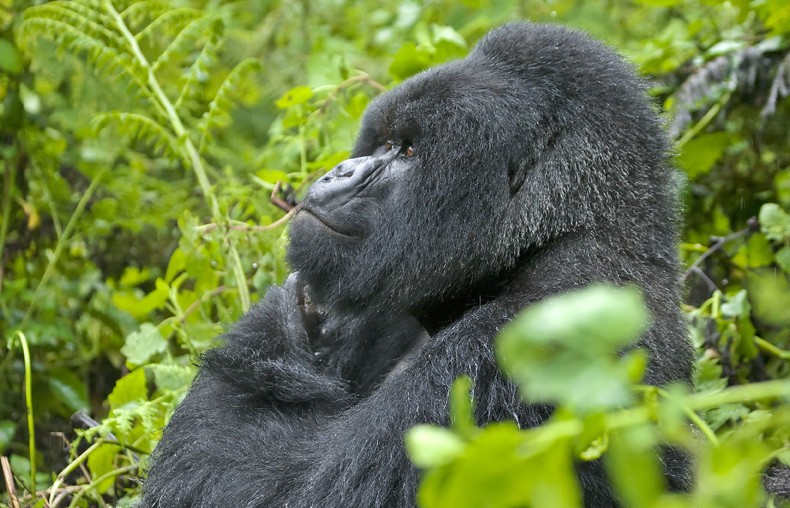
The most iconic figure in any gorilla Family is the dominant male, commonly known as a silverback. This name comes from the saddle of silvery hair that develops across his back as he matures. This isn’t just a physical change; it’s a marker of social status. Let’s explore the physical traits that define the silverback.
Immense Physicality and Stature
Weight and Height: Silverbacks are significantly larger than females, often weighing between 135 and 195 kilograms (300 to 430 pounds). When standing upright (a rare but impressive posture), they can reach heights of 1.7 to 1.8 meters (5.5 to 6 feet). This size differential is a classic example of sexual dimorphism, a common trait in polygynous primates.
Muscular Build: Their bodies are an incredible testament to strength. Prominent chest muscles, large arms, and massive thighs are standard, built for traversing dense, mountainous terrain and, if necessary, defending their group.
The Silver Saddle: As mentioned, this striking physical feature, a patch of gray or silver hair on the back, begins to appear when the male is about 12 to 15 years old, a clear sign of full maturity and dominance. It serves as a visual signal of his rank to other gorillas, both within and outside his group.
Unique Cranial Features
A silverback’s head is not just big; it’s distinctly shaped.
Sagittal Crest: This is a prominent bony ridge that runs along the top of the skull from front to back. It provides anchoring points for powerful jaw muscles. The combination of this crest and the large cheek pads (fibrous tissue that develops on the sides of the face in mature males) gives their heads a blocky, powerful, and very masculine appearance.
Canine Teeth: Although gorillas are primarily herbivorous, silverbacks have impressive, large canine teeth, used primarily in conflicts between males, either during challenges for group leadership or defense against external threats.
Individual Identification: Nose Prints
Like human fingerprints, each mountain gorilla possesses a unique pattern of wrinkles and ridges on their nose. Researchers and trackers can use these individual nose prints to identify and monitor specific gorillas throughout their lives, a crucial tool for both conservation and understanding group dynamics. This is a subtle yet vital characteristic that adds a layer of individuality to each of these magnificent creatures.
A Specialized Coat for a Mountainous Home
Life in the high-altitude forests of the Virunga Volcanoes and Bwindi Impenetrable Forest is a demanding environment, and mountain gorillas are perfectly adapted to it. Their physical characteristics extend to their fur, providing essential protection against the elements.
Thicker and Longer Hair: Compared to their lowland cousins, mountain gorillas have significantly thicker and longer coats. This dense fur, which is typically black, provides crucial insulation against the cold and damp conditions of their high-altitude habitat. They are often found in areas that get quite chilly, particularly at night and during the frequent misty rains.
Water-Resistant Properties: Their fur has some naturally water-resistant properties, helping to shed rain and keep them warm even during downpours. This adaptation is essential for survival in a region known for its high rainfall.
A Body Built for Climbing and Travel
Despite their bulky appearance, mountain gorillas are agile climbers and tireless travelers. Their physical structure is finely tuned to navigate their complex environment.
Powerful Arms: Gorillas have long, incredibly strong arms that are crucial for moving through the dense forest canopy, pulling themselves up steep slopes, and even swinging from sturdier vines. Their arms are much longer than their legs, reflecting their semi-arboreal lifestyle.
Grip and Dexterity: While not as dexterous as chimpanzees, mountain gorillas have surprisingly precise grip capabilities. Their broad hands feature an opposable thumb that is crucial for manipulating vegetation, peeling back layers of bamboo, and delicately extracting edible plants.
Skeletal Structure: Their overall skeletal structure is robust, designed to absorb the stresses of climbing and traversing uneven ground. Their broad chests and pelvises provide a solid foundation for their large muscle masses.
The Social Heart of the Mountain Gorilla
While their physical characteristics are impressive, the most fascinating aspect of mountain gorillas is often their complex social life. They are highly social, intelligent animals that live in stable, cohesive family groups. For any safari enthusiast, understanding this aspect of their life is key to truly appreciating the gorilla trekking experience.
The Complex and Dynamic Gorilla Group
A gorilla group, often referred to as a “troop,” is a sophisticated social unit, usually led by a dominant silverback. However, the dynamics within these groups are anything but simple.
Group Composition and Size
Standard Structure: A typical group consists of one dominant silverback, several adult females, and their offspring of varying ages (infants, juveniles, and sub-adults). Group size can vary significantly, from a minimum of five or six individuals to over 30, though the average is around 10 to 12.
Multiple-Male Groups: While one silverback is usually dominant, some groups contain multiple mature males. These can be brothers or unrelated males who have joined forces. This arrangement is dynamic, with clear hierarchies established among the males. The subordinate males often assist in group defense and may eventually take over leadership or split off with some females to form their own group.
Bachelors and All-Male Groups: Young males (blackbacks) who are not yet strong enough to challenge a silverback for a group of females will often leave their natal group and roam individually. These lone bachelors sometimes form all-male groups, biding their time, gaining experience, and improving their chances of successfully forming their own family group in the future.
Life Under a Protective Leader: The Silverback’s Role
The dominant silverback’s role is multifaceted, encompassing both leadership and protection. He is the glue that holds the group together.
Leadership, Decision-Making, and Daily Routine
Foraging Routes: The silverback is primarily responsible for deciding when the group moves, where they go to forage for food, and when they stop to rest. This requires intimate knowledge of their home range and the seasonal availability of different plant resources.
Group Harmony: While conflicts can occur, the silverback often plays a role in mediating disputes and maintaining a degree of harmony within the group. His very presence and dominance act as a calming influence.
Nest Building: Each night, mountain gorillas build a fresh nest for sleeping. The silverback typically builds his nest slightly apart from the females and young, often in a position that allows him to monitor the group and the surrounding area.
Guardian and Protector
This is perhaps the silverback’s most critical function. He is the ultimate guardian of his family.
Defense Against Threats: When the group is threatened by predators (though these are rare in their current habitats), other gorilla groups, or human encroachment, the silverback is the first to confront the danger. He will use vocalizations (roars), chest-beating displays, and charging to deter the threat. He will fight to the death to protect his family.
Inter-group Interactions: Most interactions between different gorilla groups are tense. Silverbacks from different groups will often engage in displays of strength and dominance, but actual physical fighting is typically avoided. These encounters often happen when groups meet at the edges of their home ranges.
Females, Maternal Care, and Family Ties
While the silverback is the focal point of the group, the adult females are essential components of the social structure. Their relationships with each other, with the silverback, and with their offspring are all crucial.
Choosing their Leader
Interestingly, the relationships among adult females within a group are generally more fluid than the relationships between males. While hierarchies do exist, they are often less rigid. One of the most critical decisions a female gorilla makes is which male to join. She typically selects a silverback who can provide protection and good genetic quality for her offspring. Females often transfer between groups, meaning a silverback’s family can grow or shrink depending on his ability to attract and retain females.
Unwavering Maternal Devotion
Mountain gorillas are known for their exceptionally strong and extended maternal bonds. The characteristic of the mother-infant connection is profound.
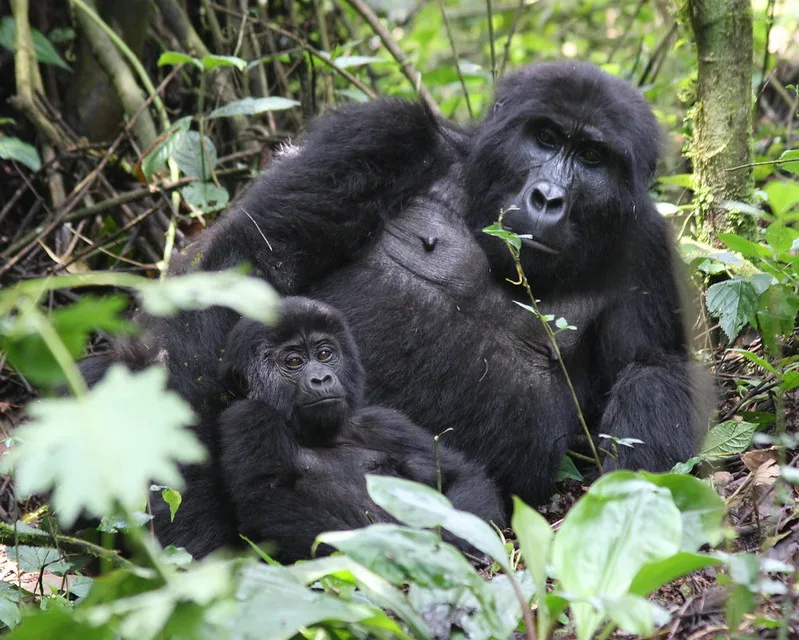
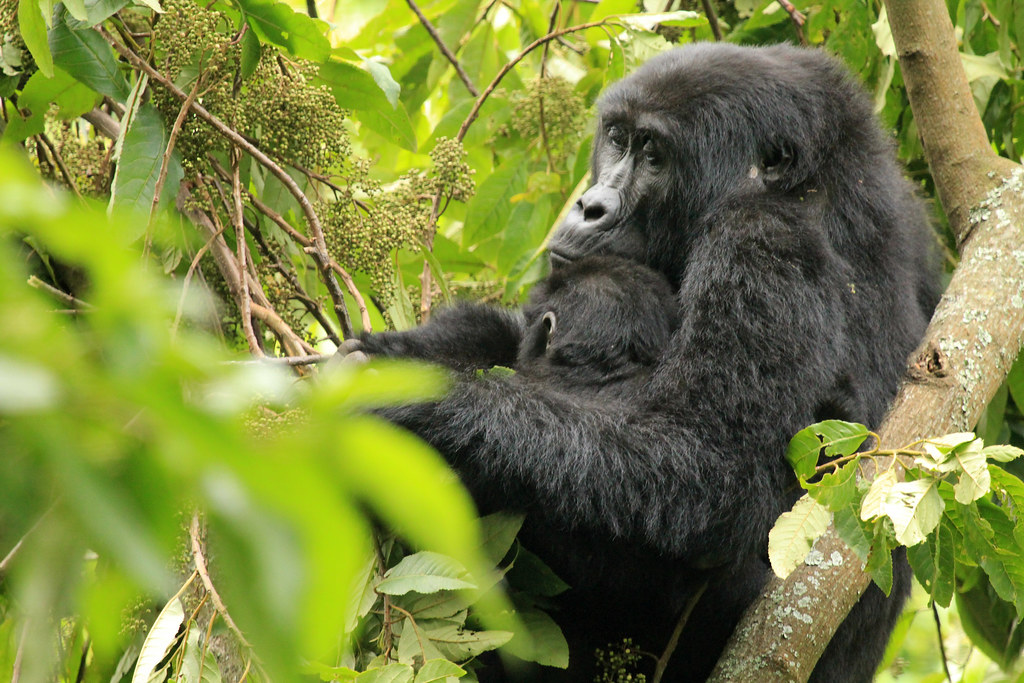
Extended Care: An infant gorilla is completely dependent on its mother for the first few years of life. For the first five months, the infant maintains constant physical contact with its mother, either carried in her arms or clinging to her chest. It begins to eat solid food at around six months, but may not be fully weaned until four or five years of age.
Learning through Imitation: Infants and juveniles learn critical social skills and foraging techniques by observing their mothers and other group members. This process of cultural transmission is essential for their development.
Protection and Affection: Mothers are incredibly protective and affectionate toward their offspring. This deep bond is palpable to observers and is one of the most heartwarming aspects of watching a gorilla family.
The Dynamics of Growing Up: Infants, Juveniles, and Blackbacks
Gorilla life follows a clear developmental path, with each stage bringing new challenges and responsibilities.
Infancy: This is a period of absolute dependence on the mother. Playfulness is a key element of their development, helping them to develop social skills and physical abilities.
Juvenility (Approx. 3-6 years): This is a period of increasing independence. Juveniles still spend significant time with their mothers but explore more, engage in more vigorous play, and begin to develop social relationships with other group members, particularly their peers.
Blackback Stage (Males, Approx. 6-12 years): Young males develop significant physical strength and dark hair, earning them the name “blackbacks.” This is a period of transition, where they are no longer dependent on their mothers and begin to test their place in the social hierarchy, eventually deciding whether to stay in their group or become a solitary bachelor.
Behavioral Characteristics: More Than Meets the Eye
Mountain gorillas exhibit a wide range of sophisticated and fascinating behavioral characteristics. Their intelligence, communication, and emotional depth are continually being researched and understood.
Intelligence Beyond Measure
Gorillas are highly intelligent primates, exhibiting features that blur the lines between human and animal cognition.
Tool Use: While not as complex as that observed in some other primates, gorillas have been documented using tools. They might use sticks to gauge the depth of a stream or a branch to fan away insects. They are also known for using leaves to catch water or clean food.
Problem-Solving: Gorillas display considerable problem-solving skills, particularly when it comes to accessing difficult-to-reach food sources. They can figure out how to navigate complex vegetation to reach preferred leaves or bamboo shoots.
Memory and Spatial Awareness: They possess excellent long-term memories and precise spatial awareness, allowing them to navigate their large home ranges and recall the locations of fruiting trees or other seasonal food sources.
A Complex Communication System
Gorillas use a rich repertoire of vocalizations, body language, and facial expressions to communicate within their group and with other groups. Understanding this behavioral characteristic is essential for rangers and researchers.
Vocalizations: A Rich Audio Landscape
The Grunt-Belch: This is the most common sound in a gorilla group. It’s a low-pitched vocalization that signals contentment, facilitates travel coordination, and simply helps group members keep track of each other within dense vegetation. Hearing a chorus of grunts as you approach a group is often the first indication that you are near.
The Whimper or Cry: Used primarily by infants and juveniles to signal distress, a need for attention, or to call for their mother.
The Scream or Shriek: A high-pitched vocalization used in fear or alarm. This can alert other group members to a potential threat.
The Roar or Bark: A powerful, loud sound produced primarily by adult males, particularly silverbacks. A roar is used in competitive displays between males to signal dominance and to warn other groups to stay away.
The Cough-Grunt: This is a distinct warning or threat sound, often used by the silverback to signal his disapproval of a certain action, whether from within his group or from an observer who is perceived as a potential threat.
Body Language: Speaking Volumes Without Words
Chest-Beating: While often seen as a display of pure aggression, chest-beating is actually a versatile signal with different nuances. It can be a sign of excitement, intimidation toward a potential rival, or even a way to release nervous energy. The sound produced can carry long distances, communicating a gorilla’s presence and potential dominance.
Body Posture: A confident, upright posture indicates dominance and strength, while a huddled or hunched position suggests submission, fear, or vulnerability. An individual may “make itself large” during a confrontation or “make itself small” to show submission.
Staring: A direct, intense stare is a sign of dominance and sometimes a challenge. Conversely, avoiding eye contact is a submissive gesture.
Playing: Rough-and-tumble play among juveniles is not only for fun but is also a critical way for them to develop physical skills, practice social interactions, and learn their place in the group hierarchy.
Diet and Foraging Habits
Understanding their diet is key to understanding where they live and how they move. Their primary characteristic here is being a selective herbivore.
A Specialized Herbivorous Diet: Mountain gorillas are almost entirely herbivorous, consuming over 100 different types of plant species. Their diet primarily consists of:
Leaves: This is their main food source, providing bulk and roughage. They are highly selective, often focusing on particular parts of specific plant species.
Bamboo Shoots: A critical and sought-after resource during the rainy seasons. The arrival of bamboo shoots often triggers seasonal migrations.
Stems and Bark: Provide essential fiber and some nutritional value.
Fruits: Although not a primary food source, gorillas will consume various wild fruits when available, and these can be important sources of carbohydrates.
Thistles and Nettles: Yes, they eat these prickly plants, utilizing their unique dexterity to avoid the worst of the stings and carefully stripping the leaves.
Selective Feeding: Gorillas are extremely selective feeders, carefully choosing only the best and most nutritious parts of each plant. This selective behavior allows them to extract maximum energy from a diet of low-quality browse.
Large Intestines and Digestion: Their digestive system is specialized to process large quantities of fibrous vegetation, featuring a greatly enlarged large intestine and caecum (a pouch at the beginning of the large intestine), where a diverse array of symbiotic bacteria help break down cellulose.
Life is Not All Work and No Play: Resting and Sleeping
While much of their day is spent foraging and traveling, gorillas also appreciate downtime. Resting and sleeping are important characteristics of their behavioral patterns.
Rest Periods: In the middle of the day, usually between 10:00 AM and 2:00 PM, gorillas will take a significant break from foraging. During this time, they will rest, sun themselves (if possible), and engage in social bonding activities like grooming.
Grooming: More Than Just Hygiene: Grooming is a crucial social activity that helps reinforce social bonds within the group. A lower-ranking gorilla will often groom a higher-ranking one, showing respect and reinforcing social order. Mothers spend considerable time grooming their offspring, cleaning their fur and deepening their connection.
Nighttime Nests: As mentioned previously, each gorilla builds a fresh nest for sleeping every single night. These nests are often constructed from branches and leaves and can be built on the ground or, less frequently, in trees. An adult silverback’s nest is usually a large, robust structure that provides both comfort and a clear view of his surrounding family.
The Emotional Depth of Gorillas
Gorillas display a wide range of emotions, including fear, anger, contentment, and seemingly even grief. Understanding this is a cornerstone of recognizing their unique characteristics.
Grief and Loss: There have been powerful observations of gorilla behavior in response to the death of a group member. Researchers have documented gorillas displaying profound signs of mourning, including remaining near the deceased body for days, vocalizing softly, and even touching the body with great tenderness.
Attachment and Affection: The obvious bonds between mothers and offspring, and even between pairs of related individuals, speak of complex emotional connections.
Individuality: Each gorilla has a distinct personality, which becomes apparent to researchers and trackers over time. Some are bold and curious, while others are shy and reserved.
Conservation Challenges: The Characteristics that Make Them Vulnerable
It is crucial to acknowledge the challenges that mountain gorillas face. Several characteristics of their life, while defining their uniqueness, also contribute to their extreme vulnerability.
Slow Reproductive Rate and Long Life Span
One of the most significant characteristics impacting their vulnerability is their slow reproductive rate.
Late Maturity: Female gorillas do not reach sexual maturity until they are about 7 to 8 years old, and they typically do not have their first infant until they are 10 or older.
Long Inter-birth Intervals: A female gorilla only gives birth every 4 to 6 years, primarily due to the intense maternal care required for each infant. This means that a female may only produce three or four offspring during her entire lifetime.
Slow Population Recovery: This naturally low reproductive rate makes mountain gorilla populations exceptionally slow to recover from any decline caused by poaching, disease, or other threats.
A Highly Specialized and Vulnerable Habitat
The characteristics of their mountainous home also create risks.
Limited Home Range: Mountain gorillas live in only two high-altitude locations, which are essentially islands of forest surrounded by human settlements. Their natural habitat is therefore limited and fragmented, with no room for expansion.
Human-Gorilla Conflict: As human populations surrounding these protected areas continue to grow, the pressure on the forests increases. This leads to habitat destruction, competition for resources, and the potential for direct conflict between humans and gorillas, especially when gorillas forage near farmland.
Disease Transmission: Perhaps the most urgent threat today is the transmission of disease from humans to gorillas. Because gorillas are genetically so close to humans, they are susceptible to many of the same respiratory illnesses, including influenza, pneumonia, and even measles. The relatively high number of tourists visiting their habitat makes this threat particularly serious, which is why strict conservation guidelines are enforced during gorilla treks.
Vulnerability to Natural Disaster
Their mountainous habitat, characterized by volcanic activity and steep terrain, also carries inherent risks.
Volcanic Eruptions: While major eruptions are infrequent, a significant eruption could have a devastating impact on gorilla populations and their critical habitat.
Landslides: Intense, prolonged rainfall can lead to catastrophic landslides, which have the potential to bury gorilla nests, kill individuals, and destroy sections of their fragile habitat.
Preparing for Your Gorilla Trekking Safari
Now that you possess a comprehensive understanding of the unique characteristics of mountain gorillas, you are better equipped to truly appreciate the experience of a gorilla trekking safari. At [Insert Your Safari Company Name], we emphasize that this is a journey of respect and profound connection. Here are some key points to consider:
Responsible Gorilla Trekking: Following the Rules
The health and well-being of the gorillas are paramount. Strict guidelines are in place to ensure your presence does not disrupt their lives or endanger them.
Distance is Key: Always maintain a safe distance from the gorillas, typically at least 7 meters (21 feet). This is for your safety and theirs, as closer contact can cause stress and facilitate disease transmission.
Health Restrictions: If you are feeling unwell with any potentially contagious illness, you should not go on a gorilla trek. This is perhaps the single most important rule to protect these vulnerable primates.
Photography Guidelines: When taking photos, avoid using a flash. The sound and sudden brightness can startle and stress the gorillas.
Respect the Environment: Leave no trace. Take all your waste with you and avoid disturbing any plant or animal life in the forest.
The Role of Conservation Tourism
Your gorilla trekking safari directly contributes to the conservation of this incredible species.
- Support for Protected Areas: The permit fees you pay go towards the management of national parks, the salaries of rangers, and the implementation of essential conservation programs.
- Community Benefits: Conservation-based tourism creates economic opportunities for the local communities that surround the gorilla habitats, providing an incentive for them to protect the forests and support gorilla conservation efforts.
- Raising Awareness: Seeing these magnificent creatures in their natural habitat will almost certainly inspire you to become a vocal advocate for their protection.
A Great Gorilla Encounter with Katland Safaris
Mountain gorillas are not just primates; they are our close genetic relatives, intelligent beings with complex social lives and profound emotional depth. Their physical characteristics are a testament to adaptation, and their behavioral characteristics reveal a complex and fascinating world. Understanding the distinct characteristics of mountain gorillas is the foundation for an unforgettable gorilla trekking safari. When you venture into the dense, high-altitude forests of the Virunga Massif or Bwindi Impenetrable Forest, you aren’t just an observer; you are participating in a critical effort to protect these unique and endangered creatures for generations to come. At Katland Safaris, we invite you to join us on this journey of respect, connection, and conservation.
Contact us now to book your gorilla trekking trip: