
Are Mountain Gorillas Herbivores? Exploring the Diet of Africa’s Gentle Giants
Are Mountain Gorillas Herbivores? When you find yourself standing just meters away from a 400-pound silverback in the dense, misty forests of Volcanoes National Park or Bwindi Impenetrable Forest, one thought usually dominates: How does something that big get so powerful?
It’s a natural question for any traveler on a gorilla trekking safari. Given their intimidating size, formidable canines, and sheer muscular build, it’s easy to imagine them as apex predators. However, the reality of their diet is much “greener” than you might expect.
In this deep dive, we answer the burning question—are mountain gorillas herbivores? and explore the fascinating nutritional world of these endangered primates in the jungles of Uganda and Rwanda.
Are Mountain Gorillas Herbivores? The short answer.
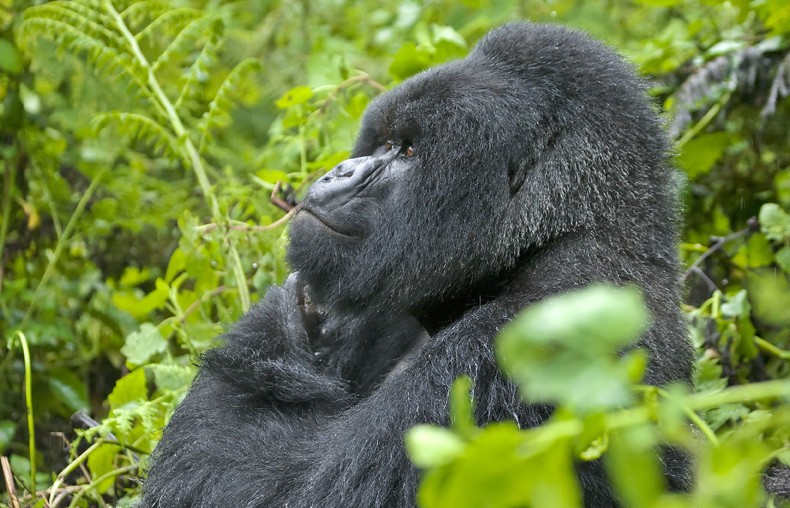
Yes, mountain gorillas are predominantly herbivores. Their diet consists almost entirely of plant matter. While they are technically classified as omnivores by some biologists because they occasionally feed on small insects, over 99% of their food intake comes from leaves, shoots, stems, and bark of trees.
Unlike their cousins, the lowland gorillas, who have easier access to high-sugar fruits, mountain gorillas live at high altitudes where fruits are scarce. This has forced them to become the ultimate “leaf-eaters” of the primate world.
Breaking Down the Mountain Gorilla Diet
To understand how a mountain gorilla maintains its massive physique, we have to look at the volume and variety of what they consume daily. An adult male silverback can eat up to 30 kilograms of vegetation in a single day.
What Exactly Do Mountain Gorillas Eat?
The diet of a mountain gorilla is surprisingly diverse, consisting of over 140 different plant species. Their meals are generally categorized into:
Shoots and Stems: These are succulent and rich in water, providing necessary hydration.
Leaves: The primary source of protein and fiber.
Pith: The soft interior of stems, which is a delicacy for gorillas.
Bark and Roots: Often consumed during the dry season when other vegetation is less abundant.
Flowers and Thistles: Despite the prickles, gorillas use their dexterous fingers to peel thistles and enjoy the soft centers.
The Role of Bamboo Shoots in the Mountain Gorilla Diet
If you are trekking in the Virunga Massif, you’ll likely see gorillas feasting on bamboo shoots. Bamboo is seasonal but highly prized. It is nutrient-dense and, interestingly, contains small amounts of cyanide that the gorillas’ digestive systems are uniquely adapted to handle.
Why Do Gorillas Have Large Canines If They Don’t Eat Meat?
One of the biggest misconceptions about gorillas stems from their teeth. If you’ve ever seen a silverback yawn, you’ve seen those long, sharp canine teeth. If they are herbivores, why do they need them?
1. Social Signaling and Defense
The primary use of those impressive canines is not hunting but display and protection. A silverback uses his teeth to intimidate rival males or to defend his troop from predators like leopards. It’s a tool of deterrence rather than a utensil for steak.
2. Processing Tough Vegetation
Don’t underestimate the toughness of the African jungle. Peeling bamboo, stripping bark from trees, and grinding down fibrous roots require significant dental strength. Those “scary” teeth are actually heavy-duty gardening tools.
Do Mountain Gorillas Ever Eat Meat?
While we classify them as herbivores, many scientists refer to them as folivores (specialized leaf-eaters). However, there is a tiny asterisk in their dietary profile.
Do Mountain Gorillas Eat Insects?
Occasionally, mountain gorillas will inadvertently—or sometimes intentionally—consume ants, termites, or grubs found on the plants they eat.
- Accidental Consumption: When eating a handful of leaves, a few ants are bound to be part of the package.
- Nutritional Supplement: These insects provide a tiny boost of vitamin B12 and minerals that aren’t readily available in plants.
However, unlike chimpanzees, mountain gorillas do not hunt monkeys, small duikers, or any other mammals. Their digestive tracts are simply not designed to process animal protein in large quantities.
The Science of the “Gorilla Belly”
If you’ve looked at a photo of a gorilla, you’ll notice they often have large, distended stomachs. In the human world, we might call it a “beer belly,” but in the gorilla world, it’s a highly efficient fermentation chamber.
How They Digest Fiber
Because plant cellulose is incredibly difficult to break down, gorillas have a very long and complex digestive tract. Their large intestines are filled with specialized bacteria that ferment the fiber, turning it into fatty acids, which the gorilla uses for energy.
This explains why they spend nearly half of their day eating and the other half resting. Digesting that massive amount of fiber takes a lot of metabolic work!
How Diet Influences the Behavior of Mountain Gorillas:
The fact that mountain gorillas are herbivores dictates almost every aspect of their daily lives. Because their food is low in calories but high in abundance, they don’t have to compete for “kills” as lions do.
- Low-Key Social Structures
Since their food doesn’t run away, gorillas don’t need to hunt in organized packs. Instead, they live in stable, peaceful family groups led by a silverback who guides them to the best foraging spots.
- Limited Travel
Fruit-eating primates often have to travel long distances to find trees in bloom. Because “the world is a salad” for mountain gorillas, they don’t need to move very far. A typical day might only involve traveling 500 meters to a kilometer.
Conservation and the Future of The Food Source of Mountain Gorillas
Understanding that mountain gorillas are herbivores is vital for their conservation. Their survival is entirely dependent on the health of the high-altitude forests in Rwanda, Uganda, and the DRC.
The Threat of Habitat Loss
As human populations grow, the “buffer zones” around national parks are often used for agriculture. When the forest shrinks, the gorillas lose their “supermarket.” Protecting the flora of the Virunga Mountains is just as important as protecting the gorillas themselves.
Climate Change and Vegetation Loss
Shifts in temperature can change the types of plants that grow at specific altitudes. If the bamboo or specific celery stalks that gorillas rely on disappear due to climate shifts, the gorillas cannot simply “switch” to hunting—they are biologically tethered to their green diet.
Frequently Asked Questions About Gorilla Diets
Do mountain gorillas drink water?
Rarely. Because their diet consists of succulent plants that are over 80% water, and they live in a misty, rainy environment, they get almost all their hydration from their food.
Can a gorilla eat meat if offered?
In some captive settings decades ago, gorillas were fed meat, but it led to severe heart disease and digestive issues. Their bodies are not evolved to process the cholesterol and fats found in animal products.
Why are they so strong if they only eat plants?
It’s all about the gut biome. Their bodies are incredible at synthesizing protein from leafy greens and turning it into lean muscle. It’s the ultimate proof that you don’t need to eat meat to be “strong as a gorilla.”
Planning Your Gorilla Trekking Safari with Katland Safaris
Seeing these massive herbivores in their natural habitat is a life-changing experience. When you book a safari with us, you aren’t just a spectator; you are contributing to the protection of these forests and the dietary resources these gorillas need to survive.
What to Expect on a Trek:
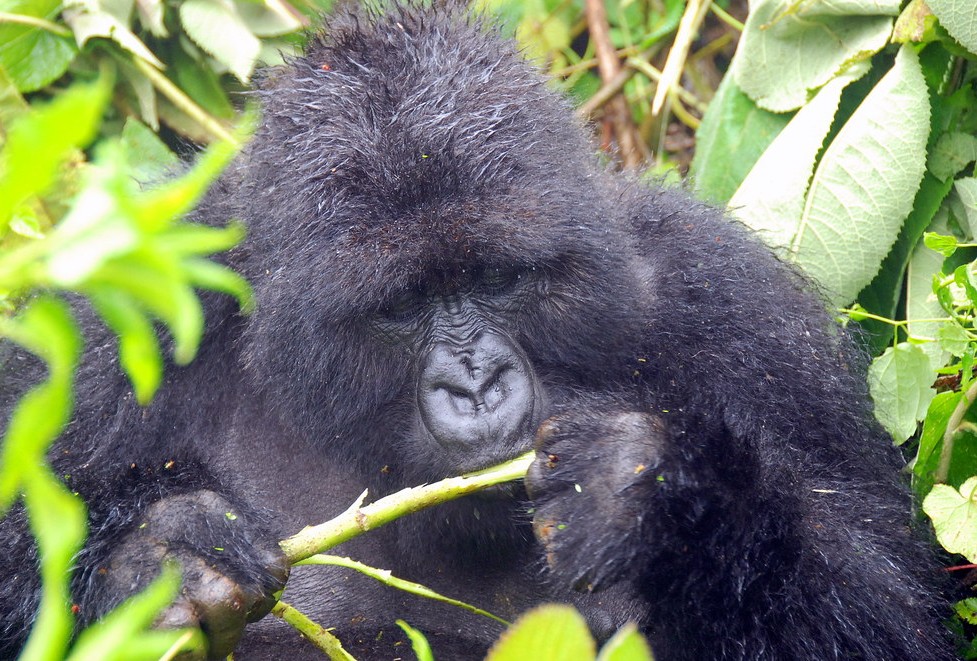
- Observing Feeding Habits: You’ll likely see them stripping bark or delicately picking leaves.
- Expert Guides: Our trackers will explain the specific plants the family is eating.
- Sustainable Travel: Your permit fees go directly toward park rangers and habitat restoration.
So, are mountain gorillas herbivores? Absolutely. They are a testament to the power of nature’s greenery. These Vegetarians of the Virungas prove that a diet of leaves, stems, and shoots can sustain one of the most powerful and majestic creatures in the African Jungle.
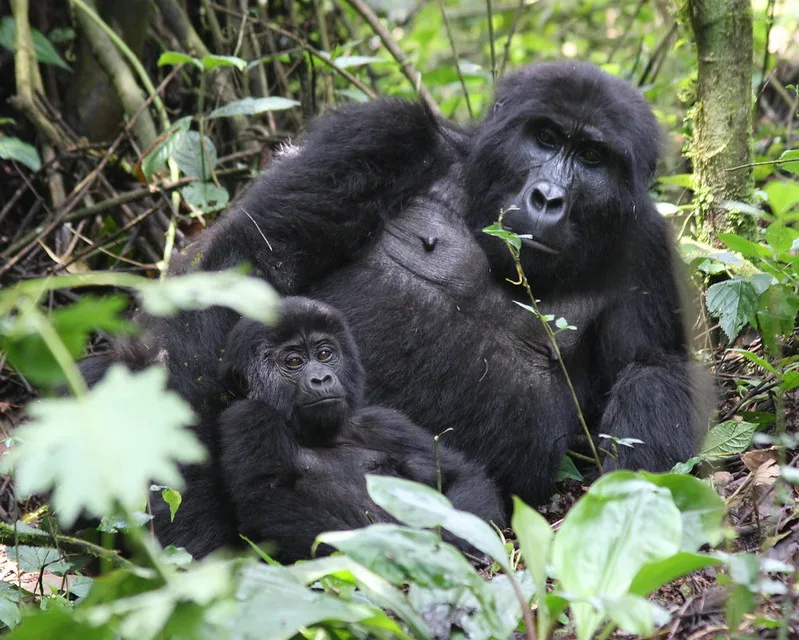
Watching a silverback peacefully munching on wild celery while his infants play nearby is a reminder of the gentle nature of these giants. Their diet isn’t just a biological fact—it’s the key to their peaceful social structure and their survival in the clouds.
Ready to see the world’s most famous herbivores in person? Contact Katland Safaris to explore our custom Uganda and Rwanda Gorilla Safari packages and start your adventure today.