
Are Mountain Gorillas Friendly? Unveiling the Gentle Giants of Africa
Are Mountain Gorillas Friendly? Forget everything you think you know about King Kong. The real giants of the mountain are far from those fierce monsters. In fact, understanding their true nature is the first step to a truly magical African safari encounter.
Mountain gorillas are truly remarkable creatures and a critically endangered subspecies of the eastern gorillas. Standing up to 6 feet tall and weighing up to 400 pounds, mountain gorillas possess incredible strength. But beneath their powerful physique lies a surprisingly gentle and complex social life.
For adventure seekers considering a truly rewarding gorilla trekking safari experience in Africa, the burning question that is normally asked is: Are mountain gorillas friendly animals? Just like the answer is with other wild animals, it is fascinating and multi-layered. Let’s delve into the intricate world of these “gentle giants” and explore what it truly means to be “friendly” in their terms.
The True Meaning of “Friendly”: Understanding the World of Mountain Gorillas
When we ask if a wild animal is friendly, we’re often applying human concepts to a non-human species. Mountain gorillas are wild animals, and their behavior is shaped by their biology and social dynamics, not by human expectations of “friendliness.”
”Friendly” for a mountain gorilla doesn’t mean they’ll cuddle you like a puppy. It means they are remarkably tolerant, peace-loving, and rarely aggressive towards humans, provided we approach them with the proper respect when in the Jungle.
Here’s why Gorilla “friendliness” is unique compared to other animals.
Social Cohesion of Mountain Gorillas is Key:
Their complex social structures, centered around strong family bonds led by a dominant silverback, foster cooperation and minimize conflict within the group. This peaceful inner world translates to a generally non-threatening demeanor towards outsiders, especially compared to some other primate species.
Non-Territorial Toward Humans:
While they defend their group’s feeding areas from other mountain gorilla groups, they do not generally view humans as direct competition for resources.
A History of Tolerance:
Decades of meticulous research and carefully managed tourism in Rwanda, Uganda, and the Democratic Republic of Congo have played a crucial role. This has habituated some mountain gorilla groups to human presence, making them comfortable with observers at a safe distance.
The Daily Life and Interactions of Mountain Gorillas while in the Jungle.
To understand their “friendliness,” it’s helpful to observe their typical daily activities. A typical day for a mountain gorilla family revolves around peaceful activities:
Foraging and Feeding in the Morning.
The day in the life of Mountain Gorillas begins with a gentle start, as the family ventures out from their nests to forage for vegetation. They travel slowly, covering a few kilometers each day, making the most of their plant-based diet. This focus on sustenance, rather than hunting or active aggression, contributes to their generally calm demeanor.
Rest and Play in the Midday.
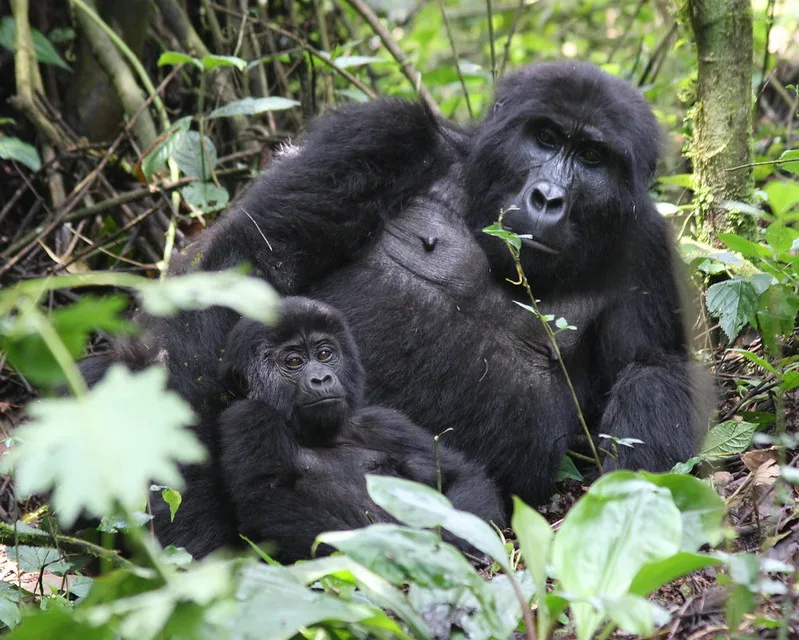
After a morning of eating, the family takes a well-deserved rest. This is a time for grooming, which not only keeps their coats clean but also strengthens social bonds. Young gorillas are incredibly playful, somersaulting, wrestling, and engaging in games that prepare them for adulthood. Observing these playful interactions is a testament to their gentle nature and strong family ties.
Finding a New Nesting Location in the Late Afternoon
As the day winds down, the group moves to a new location to build fresh nests for the night. This ritual of building a cozy spot high in the trees or on the ground highlights their need for security and comfort within their tight-knit community.
Throughout these activities, the silverback plays a crucial role as the protector of the entire gorilla Family. While powerful and capable of defense, his primary function is to maintain order and ensure the group’s safety through posturing and vocalizations rather than outright aggression. This controlled strength is a core aspect of the fascinating nature of Mountain Gorillas.
Why Do People Consider Mountain Gorillas Friendly?
The widespread perception of mountain gorillas as friendly stems from specific behaviors observed by researchers and lucky tourists:
Tolerant and Calm Behavior During the Course of Trekking:
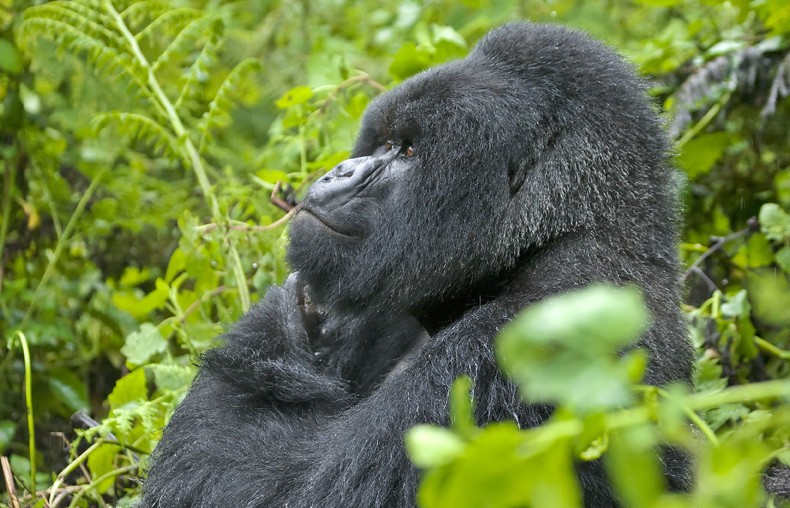
The most visible sign of mountain Gorilla “friendliness” is their remarkable calm nature that is exhibited during the course of the gorilla trekking experiences. They often continue their feeding and resting routines as if the human observers weren’t even there.
Curiosity and Playfulness more so among young ones:
Young gorillas are often curious and might venture closer to observers, though guides will quickly manage this interaction for safety. Their playful antics are heartwarming and disarming.
Gentle Social Bonds among Mountain Gorillas:
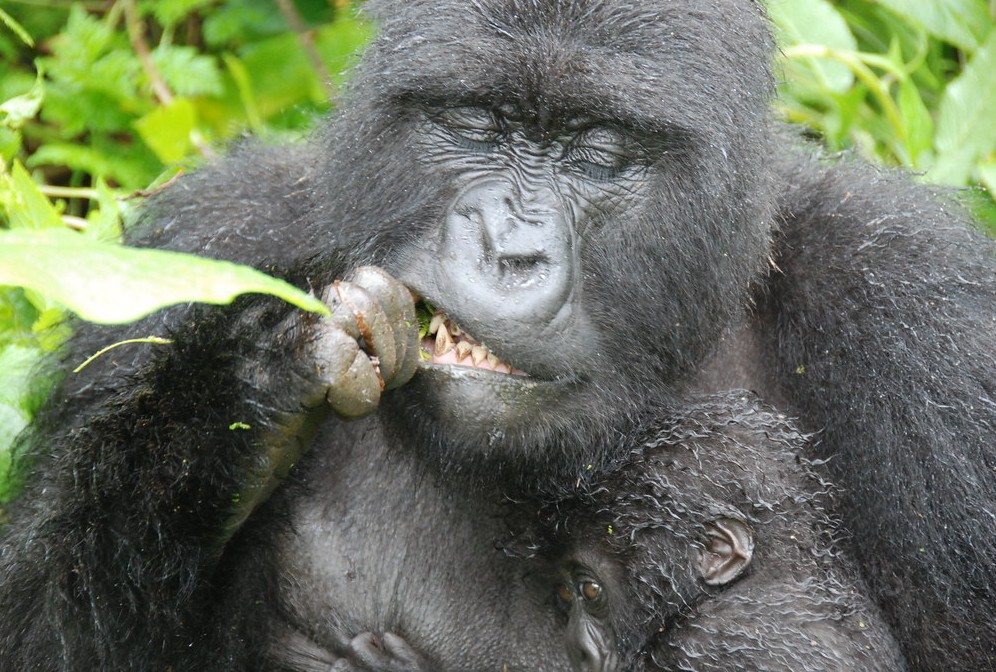
Observing the intricate care a gorilla mother provides for her infant or the gentle play between siblings showcases the compassionate side of mountain gorillas.
A Lack of Natural Aggression:
Unlike animals prone to unpredictable aggression, mountain gorillas are fundamentally peaceful herbivores. Their impressive size and strength are primarily for defense, and they will almost always choose avoidance over confrontation.
Is “Friendly” the Same as “Safe”? Navigating the Risks of Gorilla Trekking:
It’s crucial to understand that “friendly” does not mean “completely safe.” These are powerful, wild animals, and certain risks always exist:
Provocation is a Catalyst:
Even the gentlest creature will defend itself if it feels threatened. Incorrect human behavior, like loud noises, sudden movements, or getting too close, can trigger an aggressive response.
The Unpredictability of Wild Animals:
While they are highly social and generally peaceful, individual temperaments and circumstances can vary. There’s always an inherent degree of unpredictability when interacting with any wild animal.
The Silverback’s Protective Duty:
The silverback will fiercely protect his group from perceived dangers. This includes potential threats from humans, however unintentional.
Understanding Mountain Gorilla Charges.
The ultimate expression of their protective instinct is a gorilla charge. This is usually a bluff charge, intended to warn off a potential threat. It’s a dramatic display of power: they may chest-beat, roar, and run towards the perceived intruder. While terrifying, these charges are rarely meant to harm; they are defensive, not offensive. The presence of experienced trackers and strict adherence to safety protocols during treks are vital for minimizing and managing such risks.
The Role of Gorilla Trekking:
Gorilla trekking is a tightly regulated and controlled activity, designed to ensure the well-being of both Mountain gorillas and humans during the gorilla trekking activity. This is where the concept of a “safe” encounter becomes real.
Key elements that contribute to safety:
Rigorous Habituation Process: Only specific mountain gorilla groups are habituated to human presence through a lengthy, non-intrusive process led by researchers.
Expert Guides and Trackers: Trekkers are always accompanied by experienced local guides and trackers who understand mountain gorilla behavior intimately. They play a vital role in ensuring safety and interpreting the gorillas’ reactions.
Strict Adherence to Guidelines: A critical component of a safe trek is following established rules:
- Maintaining distance: Staying at least 7 meters (about 23 feet) away.
- Remaining calm and quiet: Avoiding loud noises or sudden movements.
- Not making eye contact: Staring can be interpreted as aggression.
- Not bringing food or drink: To prevent habituation and disease transmission.
The Role of Gorilla Trekking in Conservation:
It’s crucial to emphasize that responsible tourism through gorilla trekking is not just a memorable experience; it’s a vital conservation tool. The revenue generated from trekking permits funds:
Gorilla Habitat protection: Securing critical forest habitats.
Anti-poaching efforts: Protecting the gorillas from illegal activities.
Community development: Providing economic opportunities for local communities, which incentivizes them to support conservation.
Veterinary care for Mountain Gorillas: Ensuring the health of these vulnerable primates.
By choosing a reputable safari company that prioritizes ethical tourism practices, you are directly contributing to the survival of this incredible species.
Embracing the Wonder of Mountain Gorillas, the Gentle Giants with Katland Safaris
So, are mountain gorillas friendly? In the sense that they are remarkably tolerant, peaceful, and respectful of humans when approached with care, the answer is a resounding “yes.”
A mountain gorilla encounter is a life-changing experience that offers a profound glimpse into a world parallel to our own. It’s a moment of profound connection with creatures that are, in so many ways, like us.
Ready to experience this magic for yourself? Let us help you plan a responsible mountain gorilla trekking safari. We offer carefully curated itineraries to the premier gorilla habitats, ensuring a safe, respectful, and unforgettable encounter with these true “gentle giants” of Africa. Contact us today at Katland Safaris to start planning your extraordinary safari adventure.