
Mountain gorillas and ecotourism – Bwindi Impenetrable National Park – Mgahinga National Park in Uganda – Volcanoes National Park in Rwanda
Mountain gorillas and ecotourism. Living in the Virunga region, mountain gorillas are among the ice age survivors still here. Residents of Uganda in both Bwindi Impenetrable National Park and Mgahinga National Park, and in Rwanda, in Volcanoes National Park, and in D.R. Congo in Virunga National Park. Living in natural woods that have endured for more than 30000 years, they provide a large area for the mountain gorillas to traverse complex vegetation. Over time, this vegetation has gathered a large number of species.
Based on census data taken at the time and studies carried out by the Dian Fossey team, the mountain gorillas were on the brink of extinction by the 1980s. Attacks from people, and among others, blamed declining numbers.
Humans had to be brought closer if we were to rescue the mountain gorillas and establish peace between ourselves and them. Gradually, the hostility between the gorillas and humans has lessened via habituation. Many gorilla families have come to know that people live among them without changing their normal behavior. Many families opened for gorilla trekking have originated from the process of habituation for the gorilla.
So far, 13 gorilla families in Rwanda are accessible to visitors. Among them are Group 13, the Hirwa family, the Amahoro family, the Susa family, the Sabyinyo family, the Kwitonda family, Karisimbi, the Umbano family, and many more.
From the Bweza family, Habinyanja family, Mubare family, Nkuringo family, Orizogo family, Busingye family, and Nyakagezi family, to name just a few, Uganda now has over 19 gorilla families available for visitors.
Six opened gorilla trekking families from D.R. Congo so far: Kabirizi gorilla family, Rugendo gorilla family, Munyaga gorilla family, Humba gorilla family, Mapuwa gorilla family, and Lulengo gorilla family. Expanding the number of gorilla families available for gorilla trekking is challenging, given the political insurgency in this part of D.R.congo.
For those who like the natural surroundings, this Virunga region is a top choice in Africa. From plants, animals, and birds that find everyday refuge in this woodland region, its surroundings draw many kinds of species. This woodland embodies the whole concept of environmental balance.
Where can one find Mountain gorillas in Africa?
Bwindi Impenetrable National Park – Mountain gorillas and ecotourism
Southwestern Uganda has this lush wooded park. Locally, the term Bwindi signifies impenetrable; this is sufficient justification for the forest. First established in 1942, Bwindi Impenetrable National Park was then elevated to national Park status in 1992 and was named a World Heritage Site in 1994.
About 10 monkey species, over 300 natural tree species, 51 reptile species, close to 110 different animals, 310 butterfly species, and more than 350 bird species call Bwindi forest home.
Mgahinga National Park In Uganda – Mountain gorillas and ecotourism
Mgahinga National Park is in Uganda’s far South Western corner. Though one of the smaller pristine national parks in the nation, it is a fantastic location for real environmental enthusiasts.
Mountain gorillas spend much of their time in three magnificent Virunga mountains inside this picturesque national Park. These comprise Mount Muhabura, Mount Sabyinyo, and Mount Gahinga. A band of altitudinal vegetation covers the slopes of the highlands in the park, supporting a range of wildlife and plants. Only the Nyakagezi family has so far been habituated in this park for gorilla treks.
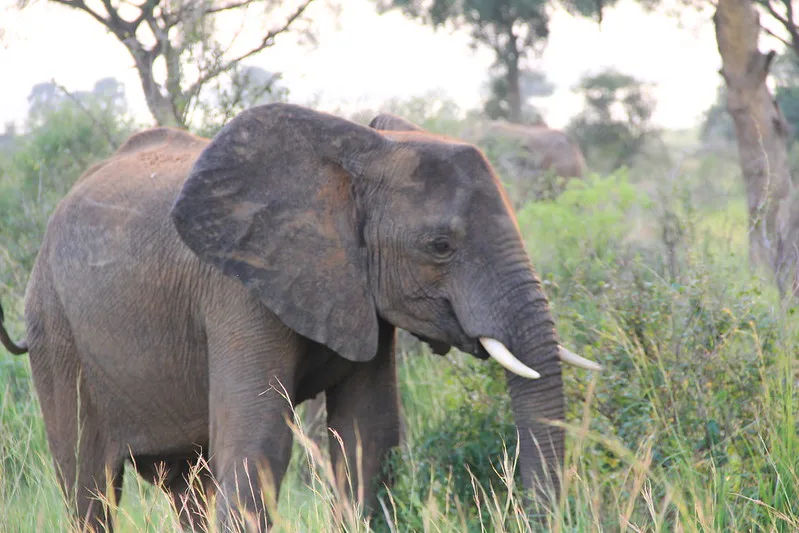
Currently known to be around 115 bird species, Mgahinga National Park has many attractions. The park draws a wide variety of birds, including those on the Red List of IUCN, even though ornithologists have not shown much concern. Among 39 animal species found in the park are elephants, leopards, buffaloes, giant forest pigs, warthogs, and others.
Volcanoes National Park In Rwanda – Mountain gorillas and ecotourism
Comprising an area of around 160 square kilometers, this park is situated in thenorthwestern portion of Rwanda. The park crosses four districts in Rwanda: Burera, Musanze, Rubavu, and Nyabihu. Recognised as a conservation area in 1925, it is among the earliest gazetted parks in Africa.
The activities in the park came to a stop until 1999 when gorilla trekking started, when civil hostilities erupted in Rwanda, particularly with reference to the 1994 genocide.
Mountain gorillas, golden monkeys, a multitude of birds, black and white colobus, vervet monkeys, blue monkeys, olive baboons,oons, and others call Volcanoes National Park home.
Virunga National Park in D.R.Congo.
On the eastern side of the D.R. Congo is the Virunga National Park. Its area is around 7800 square kilometers. King Albert of Belgium gazetted this park in 1925 to help save the threatened mountain gorillas.
Only six gorilla families have been habituated for gorilla trekking. This is due to the erratic political turmoil this region has seen since 2013.
Other primates include Chimpanzees, golden monkeys, Dent’s Mona monkeys, Hanley’s monkeys, De Brazza’s monkeys, olive baboons, grey-cheeked mangabey, African red colobus, and others call it home.
Among the other wild creatures in the Virunga National Park are blue duikers, yellow-backed duikers, aardwolf, elephants, buffaloes, okapi, gigantic forest pigs, and much more.
How to Buy Gorilla Trekking Permits:
Every visitor has to get a gorilla trekking permit from the organizations in charge of their sale. Currently costing $800 per person each trip, the Uganda gorilla trekking permits are offered by Uganda Wildlife Authority.
In Rwanda, the gorilla trekking licenses are sold by Rwanda’s Development Board (RDB) at the current rate of 1500usd per person per trip. Institute Congolais Pour La Conservation sells D.R. Congo gorilla trekking licenses for $450 per person per trip.
The first step in getting ready for gorilla trekking is confirming availability based on the day you would like to travel. Should the result be yes, you must get the permit ahead of time, as they sell really quickly. They are reserved according to first come first policy.
Getting a gorilla permit is the only way one can prove they are dedicated to engaging in this activity in Africa. Purchasing a gorilla permit helps the Mountain Gorilla Conservation Fund to be maintained. The gorilla permit cost covers park admission costs, part of the ranger guide price, gorilla fund support, etc.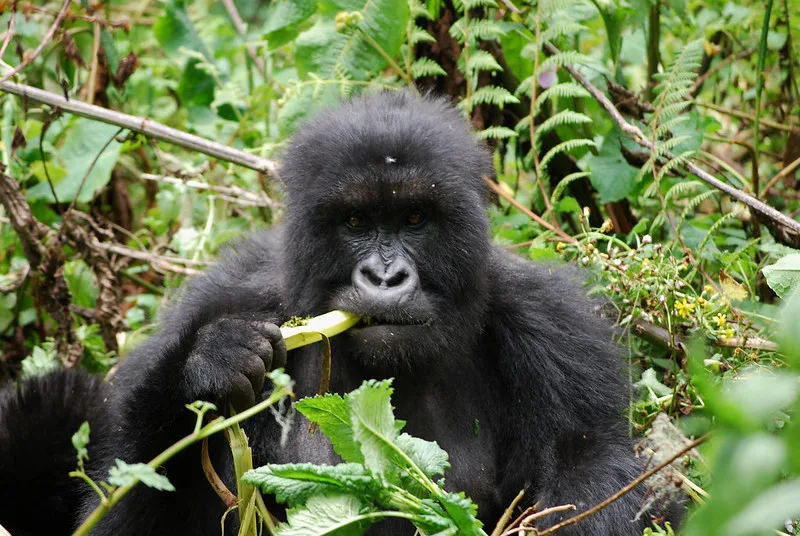
Because of their great demand, gorilla permits for Bwindi Impenetrable National Park are sold by region in Uganda. In the personal sense, the permits were sold to families, and visitors would choose one sector in the northern portion of Bwindi Impenetrable National Park. This left other families less visited by visitors, which would cause them to return to wild behavior.
The ideal time to schedule a gorilla Trekking safari across Africa.
Gorilla trekking is available all year round. All you have to do is choose a day when you would like to go gorilla trekking and get a gorilla permit in line with your safari.
While gorilla trekking safaris are an all-year-round sport, the drier season months of June to September and December to January, when less rain is forecasted in this region, are most appreciated. Unlike the rainy season, when river overflows produce a soggy ground in the forest, the rivers run in their usual path.
Usually, the rainy seasons are March through May and November. All you have to take is the appropriate gorilla trekking gear: a raincoat, long pants and shirt, a small waterproof backpack, and others.
Which nation offers the best gorilla trekking between Uganda and Rwanda?
It is the result of gorilla trekking that could decide which nation suits best. Some visitors might choose to travel short distances to the national park.
The journey from the airport in Kigali to Volcanoes National Park in Rwanda takes three hours. About six hours separate driving from Kigali city to Bwindi Impenetrable National Park. The route from Entebbe or Kampala city takes eight to nine hours to reach Bwindi Impenetrable National Park.
While a Rwanda gorilla permit costs $1500 per person per trip, a gorilla permit for Uganda is $800 daily.
While around 19 gorilla families have been habituated in Uganda, Rwanda has approximately 13 open for tourist viewing gorilla families.
Notwithstanding such variations, the encounter with the mountain gorillas eliminates all the factors influencing your choice of the ideal nation for gorilla travel.
How Difficult Is Trekking Mountain Gorillas? – Mountain gorillas and ecotourism
Generally hilly, the Virunga region calls for one point of view depending on the location where the gorillas are eating. The habitat includes hills, plateaus, and other features where the gorillas feed, particularly during severe rainy seasons when the ground is waterlogged.
You may have to climb to see the mountain gorillas, but the terrain might be slick and covered with thick creepers. The ranger guide makes a way for you to locate the gorillas where they are using a machete.
What is the age restriction For Gorilla Trekking
Given the nature of mountain gorillas, which may seem frightening at first glimpse, the age restriction for gorilla trekking is 15 years and above. A youngster below this age finds it difficult to endure the lengthy walking hours needed to locate the mountain gorillas. Sometimes the child’s fear of even the first look at the mountain gorillas drives him to yell.
Unfamiliar sounds in their surroundings constantly make mountain gorillas afraid and cause them to hide. Everyone in the gorilla trekking group pays their money to see the gorillas; yet, if this loudness scares off some of the group members, this might lead to bad blood among the others.
The Virunga area’s mainly mountainous geography might be challenging for a youngster below this age to negotiate. Although climbing the mountains may be exhausting and dangerous at times, the gorillas might be eating from there. You have to track them; however, for a little kid below this age, it might be difficult.
The Level of Danger in Gorilla Trekking – Mountain gorillas and ecotourism
Although gorilla trekking is not a risky African experience, you still need to bring appropriate clothing to guard against the conditions of the bush. Using tracking boots helps you avoid sharp areas like broken wooden bits. Long pants and shirts shield you from stinging nettles and insects safari hat shields your hair from dripping water from the tree leaves.
One of the benefits you may employ to prevent muscle atrophy after a lengthy trip in the woods is maintaining some fitness before gorilla trekking. Although you don’t spend full time in the gym, you develop your muscles for the gorilla trekking trip. Should you be physically disabled, you may rent a sedan chair or a stretcher with porters to transport you. These have to be set up beforehand.
Though they seem frightening in appearance, mountain gorillas are quite calm animals in nature. Staring at their dark, black, hairy physique with deep brown eyes makes one timid.
Being calm primates does not imply that one should harass the mountain gorillas while gorilla ttrekking as they also have emotions, but have not recorded any instances of human aggression. Given the ranger guide’s better knowledge of gorilla behavior than you have read about, try to follow his directions. Encouragement of the mountain gorillas might force them into hiding, therefore depriving the whole group of valuable paid time.
Usually, hoot, drag plants around, walk on one foot, bang their chests, and so much more when gorillas are enraged. The dominating silverback could order the whole family to go to another place where you might not be able to find them.
Leave the gorillas after one hour of viewing quietly and gently. The mountain gorillas are very attentive to their surroundings and, as a family, they let no outsiders just in; some have a powerful spy network of black backs.