
Gorilla Trekking, Myth and Reality in Uganda and Rwanda.
Gorilla trekking myth and realities. Although many ideas about mountain gorillas in Uganda and Rwanda have been spread over the globe, the real reality is found in embarking on a gorilla trekking trip. Now you can participate in the gorilla habituation experience, where semi-wild gorillas become accustomed to human presence.
Only one hour is permitted to be in the presence of the gorilla when you encounter them throughout the trip across Uganda and Rwanda. Given their typical vegetarianism, this gives them time to eat.
Mountain gorillas eat more than three hundred pounds of vegetation every day to sustain their pure bodies both during the day and at night. The mountain gorillas find it difficult to conceive, even with people around.
The mountain gorillas reside in Bwindi Impenetrable National Park and Mgahinga National Park in Uganda, Volcanoes National Park in Rwanda, and Virunga National Park D.R. Congo. Right now, only around 1000 mountain gorillas are still alive.
About Trekking with Gorillas in Uganda and Rwanda
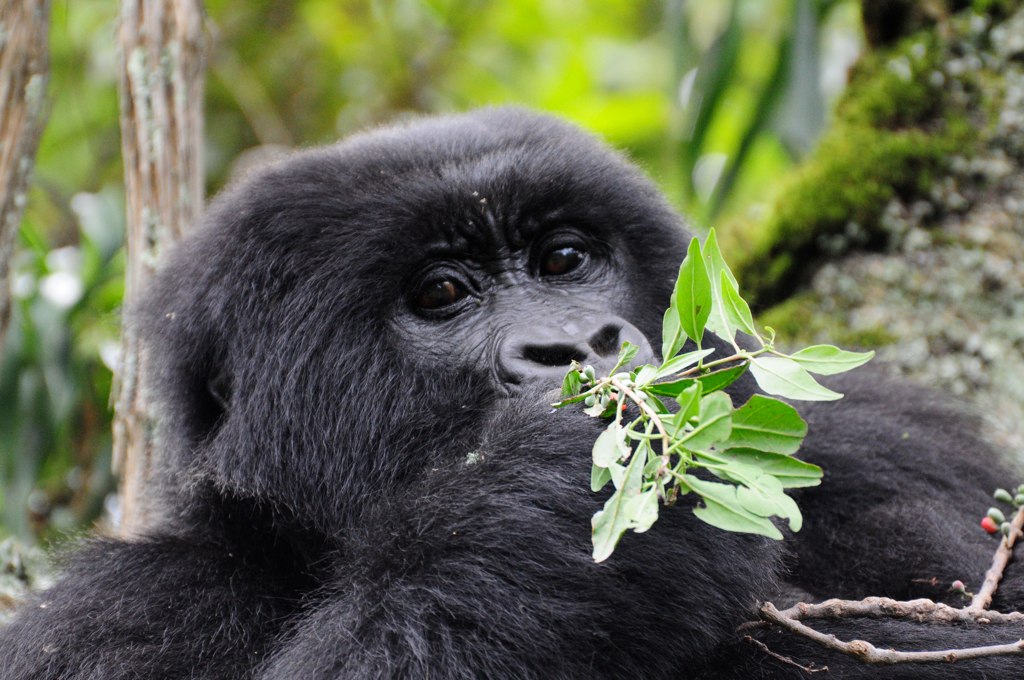
Gorilla trekking myth and realities. To take part, you must save a gorilla trekking permit. Only a maximum of eight gorilla trekking permits are permitted daily to satisfy a particular gorilla family. This aims to lower the number of potential trampled-on vegetation-loving hikers. Because they are vegetarian, the mountain gorillas live on bamboo, their delicacy, delicate stems, leaves, and fruits, and sometimes add ants to their diet.
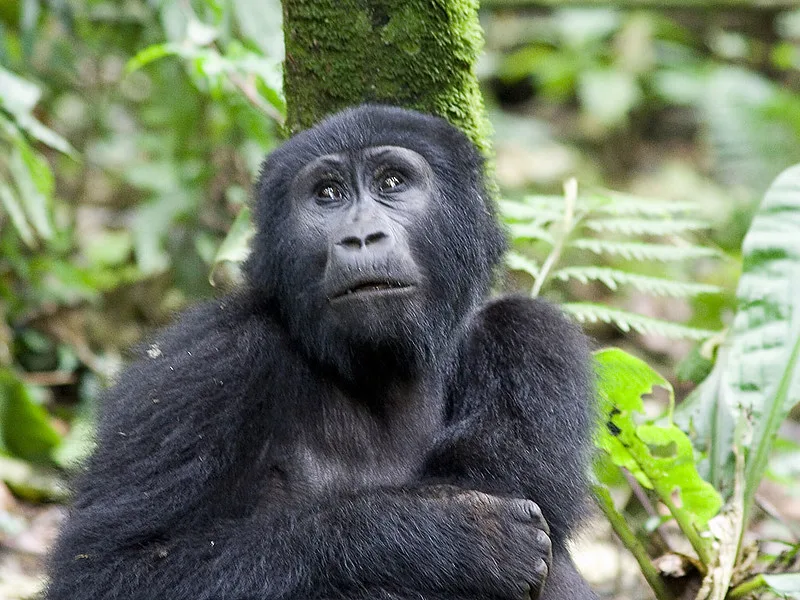
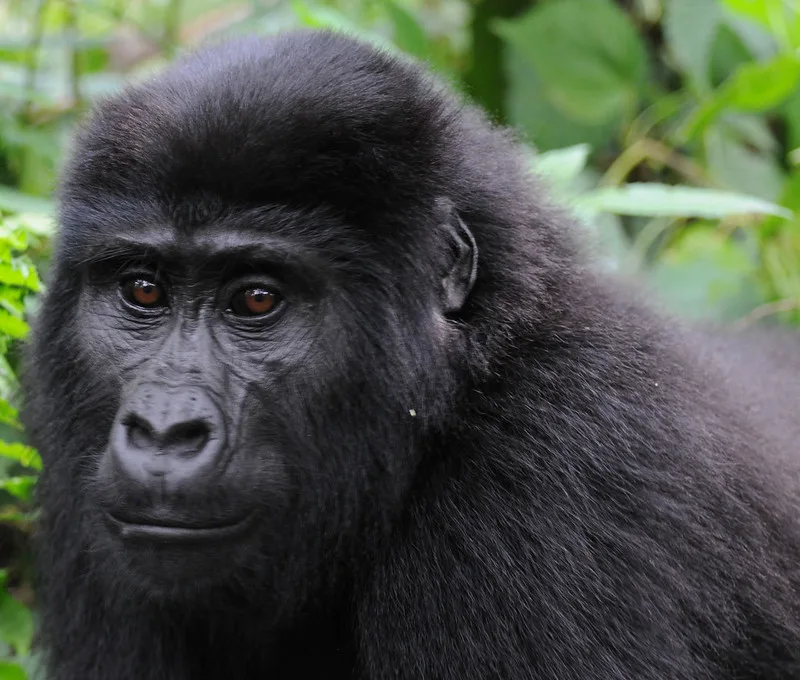
Though physically striking, mountain gorillas are reclusive creatures in nature. Their black coat of fur covers their body, and their dark brown eyes have sunken. Mountain gorillas get about via knuckle movements. With age, the grayish saddle of hair on the rear of the silver backs changes.
Living in families under the direction of the dominant male with an autocratic leader are the mountain gorillas. He demands respect from all family members, even the men, and has all the authority over the ladies in the house. Only one man thinks he has the right to procreate with the woman. He battles to the last breath to protect his family from the assaulting wild tribes and therefore preserve his liberty.
The mountain gorillas feed their young mammary gland for a duration comparable to people and have a gestation period similar to that of humans.
Most successful silverbacks who formerly dominated and former dominant males murder their newborns so they may begin their own line of descent.
The mountain gorillas spend their evenings in nests they build, then de-nest around daylight to go about their daily business.
Sometimes the gorilla family runs a black back spy network to maintain security within the mountain gorilla family.
Mountain Gorillas: How aggressive are they? |Gorilla trekking myth and realities
As was already established, mountain gorillas are calm animals, even if they have frightening appearances. No one has ever been recorded becoming a victim of the mountain gorillas’ hostility.
This does not imply, however, that you harass them on the gorilla trail. Every visitor pays for their gorilla trekking permit and seeks value for money. Agitating the mountain gorillas might cause them to hide, therefore lowering the projected one-hour view of the mountain gorillas.
 Mountain gorillas often pound their chests, pull grass around them, walk on one leg, and hoot when enraged. Usually, they hide a means of escape from anything questionable in there.
Try not to stare into the black eyes of the mountain gorillas while gorilla trekking, as this disturbs them. If one surrounds the mountain gorillas, they might feel attacked.
It is strange because the forest is usually calm, and only the sounds of birds or monkeys that the gorillas are acquainted with are alien to them. In case you cannot remain silent when you come among the mountain gorillas, every hiker is urged to speak softly or silently. Using a soundproof camera is encouraged when photographing; Flash photography is not advised. This helps one avoid producing strange sounds among the mountain gorillas.
After seeing the mountain gorillas, carefully withdraw without upsetting the gorilla trekking family members.
Where in Uganda and Rwanda should one go for gorilla trekking? | Gorilla trekking myth and realities
Gorilla trekking in Uganda
On the southern Western edge of Uganda is Bwindi Impenetrable National Park. About eighteen gorilla families call this home. Locally, Bwindi means Impenetrable, and in fact, this tropical rain forest is suitable for this twofold meaning.
Living among others like black and white colobus, red-tailed monkeys, blue monkeys, grey-cheeked mangabey, L’Hoest’s, olive baboons, chimpanzees, and others are the mountain gorillas.
Without visiting Bwindi Impenetrable National Park, birding experiences in Uganda cannot be complete. The Forest is home to more than 350 species, including 23 species of Uganda Albertine endemics. Particularly, the Mubwindi marsh, Ruhijah region, is the principal birding site of Bwindi Impenetrable National Park.
When planning a Gorilla trekking trip, booking lodging in Bwindi Impenetrable National Park or in the location where your permit is booked will pay well.
Currently home to one gorilla trekking family, Nyakagezi, Mgahinga National Park in Uganda. The mountain gorillas are free-ranging creatures without understanding of political borders, hence this gorilla family used to wander into Rwanda. This explains why its gorilla permits were booked on the ground, depending on mountain gorilla availability.
With three of the five Virunga hills as its background, Mgahinga National Park boasts its magnificent views. Rising on the northern slopes of Mountain Muhavura, Mountain Sabyinyo, and Mountain Gahinga, the park forms a regional background.
Among other species, Golden monkeys, black and white colobus, red-tailed monkeys, grey-cheeked mangabey, and blue monkeys call this park home.
With around 115 species of birds so far identified, Mgahinga National Park has an outstanding bird list. Among the species you could find to see are Dusky Tutu Dove, Alpine Chat, Malachite Sunbird, Montane Double-Collared Sunbird, Rwenzori Turaco, Lagden’s Bush Shrike, and more.
Gorilla trekking in Rwanda
With around 13 gorilla families reported so far, Volcanoes National Park is the gorilla trekking destination for Rwanda. Five of the Virunga volcanoes in the park are Mountain Bisoke, Mountain Karisimbi, Mountain Gahinga, Mountain Muhabura, and Mountain Sabyinyo.
Purchased from the Rwanda Development Boards ( RDB), a gorilla trekking permit for Rwanda allows one to wake up for a briefing on ORTPN in Volcanoes National Park.
Besides gorilla trekking, the golden monkeys call Volcanoes National Park home. These are a rare species of primates whose body size exceeds that of typical monkeys. Their hair around the stomach, bottom, middle, and lower back is golden brown. In the forest, they keep you on alert and are really swift and thrilling to observe.
Blue monkeysgrey-cheekeded mangabey, red-tailed monkeys, black and white colobus, olive baboons, and others all call Volcanoes National Park home.
How much are safaris for gorilla trekking in Uganda and Rwanda? | Gorilla trekking myth and realities
The cost of the gorilla trekking safari varies on many elements, including the cost of gorilla trekking permits, which in Rwanda is $1500 per person in Uganda $800 per person.
The minimum number of days anticipated on safari. At least two days off for gorilla trekking is believed to be the minimum amount of time spent on safari in Rwanda.
The cost also varies depending on whether you combine gorilla trekking with other pursuits as game drives, chimpanzee trekking, white water rafting, birdwatching, and others.
Additionally, adding to the expense of gorilla trekking are the number of individuals with you. A gorilla trekking safari has a lower cost per person the higher the group, because of shared costs; hence, the cost increases with a reduction in the Number.
Sometimes the season you schedule your gorilla trekking expedition determines its cost. Usually, the peak seasons incur additional expenses on safari elements like lodging, transportation, ranger guides, and other elements. Gorilla trekking is highly sought after in both peak and low seasons; low seasons can draw decreased prices on the components of the trip.
The kind of premium, middle-class, or budget package you choose for gorilla trekking also affects your overall trip cost. These packages have many inclusions and exclusions that define them.
When Should One Plan a Gorilla Trekking Safari? | Gorilla trekking myth and realities
Though all year long, gorilla trekking trips are accessible, the dry months draw more visitors. More visitors visit the mountain gorillas from June to September and from December to January.
Many have the opportunity to utilize these vacations, so the festival season is a gorilla trekking high season. Book at least six months in advance if you want to conduct gorilla trekking during this time. Some even set aside a year ahead.
Less rain in the Virunga region around this time might also let visitors enjoy a seamless journey. This area is well-known for getting early showers that could continue the whole day.
Trekkers are recommended to pack a poncho or raincoat to guard against conditions like these. You have to bring them even during the dry season because, in this location, it rains without notice. It is rather crucial to pack some warm attire for the bitterly chilly mornings and nights.
The low seasons, which fall between March and May and November, result in fewer visitors, therefore less opportunity to impede your ability to get the greatest pictures of mountain gorillas. Services in the lodges are less complete; so, there may be cheaper rates on other activities like gorilla trekking packages.
How challenging is gorilla trekking in Rwanda and Uganda?
The gorilla trekking experience takes place in demanding surroundings, hence you should be somewhat physically fit. Given that this is a volcanic region, the soils are soft, yet rain falls there often. The area’s rich river network floods sometimes to provide a marshy terrain. Walking calls for the proper gorilla trekking boots to protect your feet from prickly surfaces.
You must be somewhat fit if you want to really appreciate the experience. You should engage in some basic workouts to prevent muscle atrophy before gorilla trekking. You should be patient before you locate the mountain gorillas, as the date of their discovery is uncertain.
What should one bring for Gorilla Trekking in Rwanda and Uganda?
For your African safari, packing light will be very beneficial, and you won’t have to worry about who is going to assist you with luggage handling.
The gorilla trekking safari packing list calls for some of the following items:
Safari boots have sharp surfaces that might puncture you while wearing them in the woods.
A bigger brim folding safari hat to hide your hair from dripping water from the leaves.
Insect repellent, so smear your body and keep away stinging insects in the outdoors.
Toiletries to have on hand should the lodge not provide.
Two binoculars will let one observe far-off animals more clearly.
The flash-less camera lets you remember your encounter with the mountain gorillas.
A waterproof rucksack to load your stuff so that it stays dry or is not lost upon a fall.
Two pajamas to wear in the evening, should it turn really chilly.
Garden gloves will shield your hands from pikes and slippery creepers you land your palms on to get a firmer hold.
Since solar is the primary energy used, a torch should be used when the lights go off at night.
An additional battery to swap in case of first one runs low
Get in touch to get more information.