
Giraffes to control the acacia spread in Lake Mburo National Park.
Twenty giraffes have been guaranteed by Uganda’s wildlife Authority to be replenished in Lake Mburo National Park, therefore drawing more visitors to this little national park. Pioneering this initiative to ensure that it is successful is a team of rangers from Murchison Falls National Park.
Lake Mburo National Park is notably the nearest National Park to Kampala capital city. About 228km separates Kampala from Lake Mburo National Park, hence one should expect three hours to reach there.
Anyone heading to go gorilla trekking might stop on the lengthy trip to Bwindi Impenetrable National Park for a wildlife safari experience before Gorilla trekking.
Once present in Lake Mburo National Park, these giraffes were declared extinct in the late 1960s based on several factors, including human and animal conflicts in and around the park.
Given their sensitivity, experts believe that moving these giraffes from Murchison Falls National Park to Lake Mburo National Park may take one month or more, with Several rangers from Murchison Falls National Park and Kidepo Valley National Park.
These will supervise giraffes’ behaviour in the new surroundings of Lake Mburo National Park. Two national parks in Uganda are known to be inhabited by giraffes: Kidepo Valley National Park and Murchison Falls National Park.
A boma has been built at Lake Mburo National Park, where these giraffes will be housed for three weeks before being released into the wild, therefore ensuring their adaptation.
Known as a place for impalas, elands, and zebras, Lake Mburo National place will have a different complete picture once the long, towering animals arrive.
According to the Uganda Wildlife Authority, this would increase the number of visitors to Lake Mburo National Park, therefore generating more income from both local and international visitors. Since Acacia Hockii provides food for giraffes, their introduction will help to lower the quantity of these plants taken from other pastures used by other animals, as they threaten to dominate the entire park area. These plants have been surviving since giraffes that formerly ate them were declared extinct in the late 1960s.
One of the challenges Lake Mburo National Park faced was a hostile population nearby. Mostly cattle keepers who used to migrate their animals, the local populace around the Lake Mburo National Park was not spared.
Policy reforms were implemented wherein the park distributes some income to the residents, therefore balancing the connection between them and the Uganda Wildlife Authority. About twenty percent of the yearly local income from Lake Mburo National Park is returned to the local community to meet local needs.
Furthermore, the community is allowed, but underthe rules of park officials, to utilize resources like the lake for water and land for cattle grazing, among other things. The better link between the park and the nearby towns has created an atmosphere that will help to grow and bringLakee Mburo National Park back to its former splendor.
Should this be successful, additional visitors to Lake MbNational Parkarks are expected to engage in events like game drives, boat excursions on the lake, night drives, and others.
Additionally available are guided safari hikes in Lake Mburo National Park, entirely run by Uganda Wildlife Authority ranger personnel. Though the park is not renowned for housing lions or other predators, chances of running into other creatures that might endanger you are great should you not have expert protection.
Along with cultural tours and visits to adjacent farms to observe the renowned long-horned Ankole cattle and so much more, you may ride horses at the nearby Mihingo resort. We are excited to watch how the neighborhood will respond to this and how the giraffes themselves will adjust to these new surroundings. We will keep you informed on any further advances.
Specifics about the activities to do at Lake Mburo National Park
Game Drives at Lake Mburo National Park
Early morning or late evening, while you drive in the large Lake Mburo NatioParkpark, you may see giraffes, impalas, Defassa water bucks, bushbuck, reedbucks, cape buffaloes, Burchell’s zebras, elands, topis, oribi, hippos, crocodiles, and others. Many savanna birds and mammals are easily seen.
Take in the fantastic views of Lake Mburo and beautiful verdant greenery,y where most ungulates find habitat. From the northern and eastern sides of the park, you can observe grassy valley flooring that annually develops out of lush and wet rrainwater drainagecoming from undulating hills.
Following the routes in southern Lake Mburo National Park will bring you into thick forest where bushbucks and bush duikers are very frequent. Enjoy the panoramic view of Lake Mburo as you go to Kigamba hill or Kazuma hill. Discover the rock kopje situated on the eastern edge of the park.
Trip on Lake Mburo in a Boat
During the two hours of a boat excursion on the eastern shore of Lake Mburo National Park, you have the opportunity to see crocodiles and hippos. Like pelicans, herons, cormorants, fish eagle, shoebill,l and others, many birds swarm the lake coastline.
The calm lake air allows you to unwind and enjoy your vacation in Uganda away from busy offices.
If Park officials approve, you may be able to watch fishermen throwing their nets to get some fish.
Nature moves under direction. In the National Park of Lake Mburo
A stroll through Rubanga Forest will provide what nature is rejuvenating. Though little in terms of a forest, environmentally, it is endowed. You taste a tropical high forest witha closed canopy and like it. Many of the primates like living in this park. Among these Primates are olive baboons, black and white colobus monkeys, red-tailed monkeys, vervet monkeys, and others.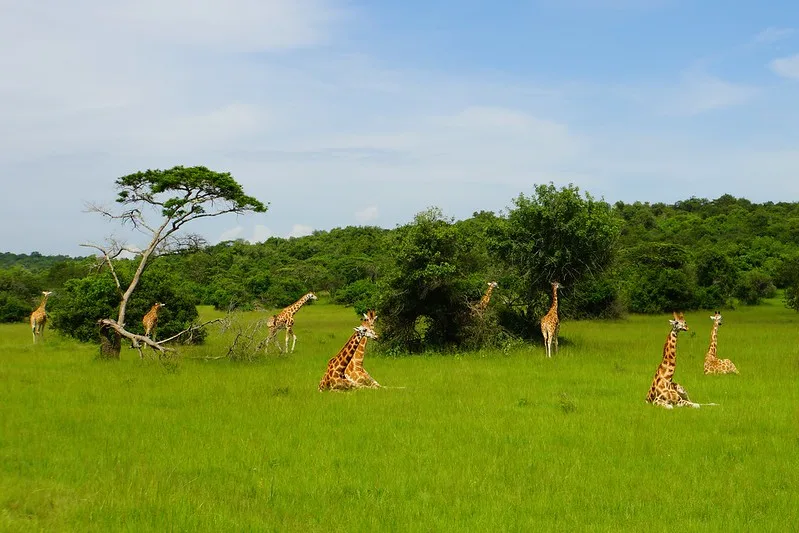
Walking to the salt lick location near Rwonyo allows you to see many species that like licking this salted ground. Standing at the observation platform will let you see creatures include Uganda Kobs, elands, reedbucks, impalas, and others.
Safaris for birding in the National Park
Many species, including feaglesgels, herocormorants, papyrus Gonolek, African Scops, African Fin foot, Brown Chested PloRed-facedfaced and black collared barbet, find a suitable habitat at Lake Mburo National Park.
Acacia forest covers the park and is home to many birds. Should you like to witness species of savanna birds such as the Red-faced Barbet, Lake Mburo National Park is the ideal location.
Along the beaches of Lake Mburo, you may witness African finfoot, papyrus GonolWhite-tailediled and Pennant-winged night jaVerreaux’s Eagle,-owlfiery-neckedeckWhite-tailediled and Pennant-winged night jashoebillb, and others.
Riding horses back on the Uganda Safari
Horseback riding inside Uganda’s national parks is limited to Lake Mburo National Park. You must conduct a previous booking to save a ranger guide for this use. Instructors are here to guide you through this journey; you do not need any expertise in horse riding.
Discover the park and everything around it to get the finest experience of nature from behind a horse. Animals include cape buffaloes, elephants, bush duikers, waterbucks, warthogs, bushbucks, reedbucks, giraffes, impalas, elands, and more might be seen here. This deal is with Mihingo Lodge.
Cultural Tours nearthe National Park of Lake Mburo
For visitors to appreciate, the rich Ankole culture is just outstanding. Ankole people have their customs mostly around livestock and its derivatives. When you have an opportunity for a house stay, you might be able to participate in chores include milking a cow, making ghee, transporting the cows to feed, and others.
Omugabe, the traditional chief of the Ankole tribe, has his castle open to anyone interested in culture today.
What shouldonee pack for a safari in Lake Mburo National Park?
When on a wildlife drive in the bush, what safari hat to wear? It has to span your hair from dirty tracks.
a camera for capturing wild animal pictures.
Use bug repellent to spread oneself and avoid wilderness stinging insects.
Two binoculars will help you to bring the faraway details closer.
Just in case you are wounded in the outdoors, a first aid kit
a rucksack to hold your safari tools.
Sunscreen protects your skin from UV radiation. Sometimes you get sunburns when your skin is too much exposed to sunrays. On your skin, this may not look good.
Pajamas for the evening, asit either becomes too hot or chilly.
For cases of lodges that may not have them or those uncomfortable on your skin, toiletries
Like Khaki, Tan, and others, Safari shirts or convertible pants in wilderness suitable hues. Try not to take garments in colors like blue, white, or blac,k as they attract tsetse flies.
Since most lodges ruon n solar for heating water and lighting, a torch should be used in case the lights go out in the evening.
Just in case these bugs find your room, pack spray.
Should you need to recharge your electronic devices, a travel adaptor or charger is advised. Having a backup battery ready should your camera run low, and you have to replace it.
A warmer since early mornings at Lake Mburo National Park, and the evenings are very chilly.
Just in case you have to buy any personal stuff like souvenirs, some hard cash should be converted into local money. Credit cards are not widely utilized in Africa because of the involved procedure of obtaining money from them.
You can be obliged to carry the luggage by yourself, particularly while switching from one site to another, therefore a duffel bag to carry your safari equipment is essential.
When would be the ideal visit for Lake Mburo National Park?
Mburo National Park is open all year round. However, the dry months are best for wildlife drives as even walking safaris are comfortable and the trails are not slick.
You must reserve lodging for your visit to the park; among the options are Mihingo Lodge, Rwonyo Rest Camp, Mantana Tented Camp, Uganda Wildlife Authority dormitories, and other lodgings can be found in Mbarara city.
How can one reach Lake Mburo National Park?
Like the stopover for every safari carried out in Western Uganda, Lake Mburo is 228 kilometers. You will reach there in three to four hours.
13km beyond Lyantonde, the Nshara gate allows you access to Lake Mburo National PAnotherother is by the Sanga gate via the Sanga commercial hub, 27 kilometers from Lyantonde.
Daily domestic flights run from Kajansi Airstrip or Entebbe Airport.
Though you may reserve charter flights as well, you must do this before your trip.
Safaris in Lake Mburo National Park cost what?
A safari to Lake Mburo NatioParkpark has a common cost based on park admission fees that does not vary depending on luxury, mid-range, or budget packaOtherhers Uganda safari prices depend on the lodging you choose to stay at, the number of people traveling with, the safari’s timing—that of either peak or low season—and others.