Frequently Asked Questions about Bwindi Impenetrable Forest National Park

Frequently Asked Questions about Bwindi Impenetrable Forest National Park.
Questions about Bwindi Impenetrable Forest.
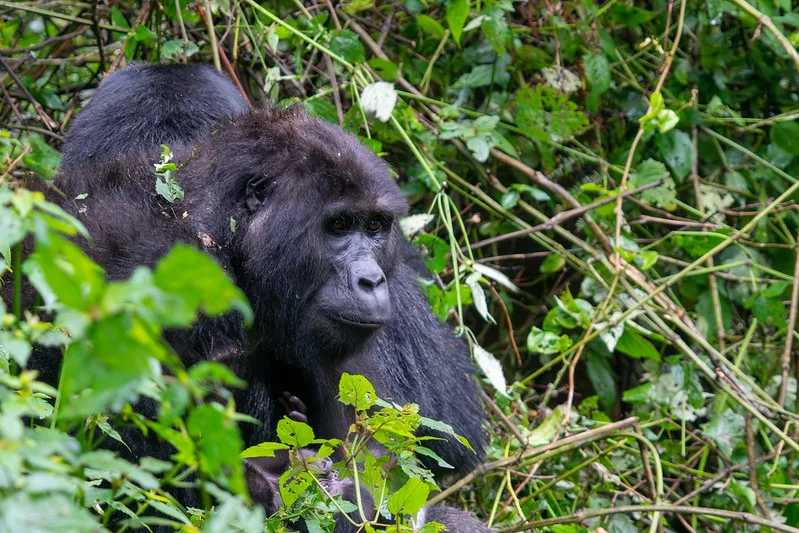
Bwindi Impenetrable National Park is a Perfect woodland in South Western Uganda and a safe home to more than half of the remaining population of montain Gorillas. Dark and thick is where it gets its name, Bwindi. Locally, the Bakiga refer to the forest as “Bwindi,” meaning impenetrable and definitely appropriate for this twofold meaning.
One travels 530 miles on the route from Kampala, the capital of Uganda, arriving after around eight hours without stopping.
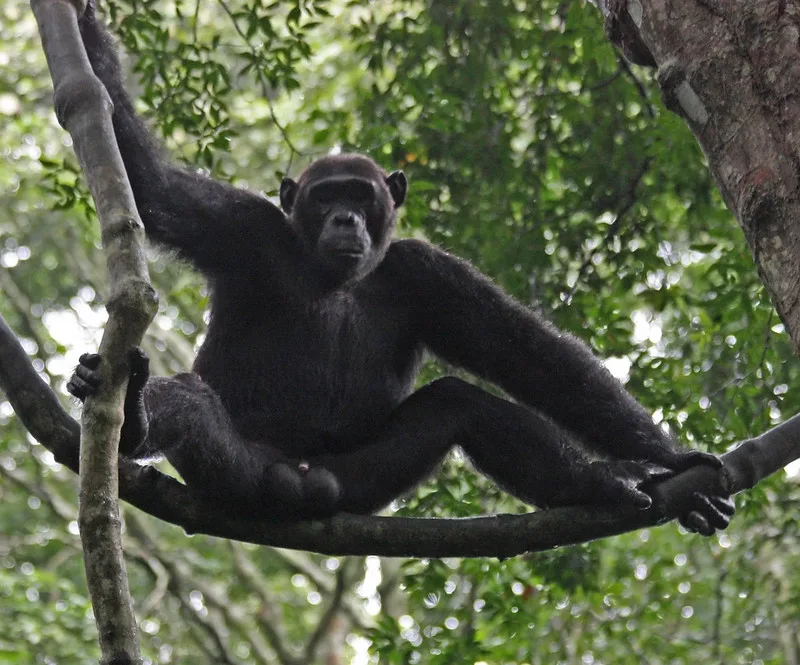
Although the major activity in this old park is gorilla trekking, it is a wildlife refuge, having been one of the ice age survivors. Among the many primates who love the offerings of Bwindi forest are Black and white colobus, blue monkeys, olive baboons, L’Hoest’s, red-tailed monkeys, and chimpanzees.
Other wild creatures that call Bwindi Forest home include warthogs, duikers, Giant Forest pigs, and forest elephants.
Since this is the main birding site in Uganda and Africa, a birding safari to Uganda without Bwindi National Park is incomplete. On the IUCN red list, Bwindi Impenetrable National Park has about 23 of 26 Albertine endemics among around 350 bird species.
Frequently Asked Questions about Bwindi Impenetrable Forest National Park
Where is Bwindi Impenetrable Forest located?
Bwindi Impenetrable National Park is found in southwest Uganda. The park was split into two halves, northern Bwindi and Southern Bwindi, for management reasons, and it holds the largest remaining population of mountain gorillas.
The park is located 1160 meters to 2607 meters above sea level, and the main adventure activity of Bwindi Impenetrable National Park is trekking to find mountain gorillas.
About 2390 mm of rain falls in Bwindi Forest annually from all directions of the earth. Temperatures of the Bwindi Impenetrable National Park range from 7 degrees Celsius to -20 degrees Celsius.
Activities In Bwindi Impenetrable National Park
Trekking Gorillas
The attraction of Bwindi Impenetrable Forest National Park is gorilla trekking. Though offered based on the location, a Gorilla Trekking permit lets you see the mountain gorillas. There are four gorilla trekking sites in the Bwindi forest: the main administrative region is the Buhoma area, the Ruhija area, the Rushaga area, and Nthe kuringo area. Gorilla families in each region are visited by a maximum of eight daily customers.
Birding in the Forest of Bwindi
The main place people go birdwatching in Uganda and Africa is Bwindi. The woodland welcomes about 350 different bird species, including Albertine endemics. Every day, keen birders have an opportunity to find more than one hundred different species.
The list is large; some birds include Western Green Tinkerbird, Mountain Masked, Chestnut-throated Apalis, African Hill Babbler, Collared Apalis, Rwenzori Batis, and white-tailed Crested Fly Catcher.
For eager birders, the Ruhija gorilla trekking region is a great part of Bwindi. For birding in Uganda, the true gem is the Mubwindi Swamp.
Primate walks in Bwindi
Apart from the mountain gorillas, Bwindi forest supports various other primates like chimpanzees, black and white colobus, blue monkeys, grey-cheeked mangabey, vervet monkeys, and red-tailed monkeys. The list is unbounded.
A natural stroll in Bwindi Forest National Park,
Anyone wanting a stroll in Bwindi forest, including Munyanga river route immediately below Buhoma, has several options for trails to suit their needs for seeing birds and many primates.
Waterfall tail travels past tree ferns traversing lovely falls.
The greatest place to appreciate the western rift valley and get a fantastic perspective of Lake Edward and the Rwenzori mountains on a clear, bright day is Rushura Hill Trail.
Rising from the top of Rukubira hill, Muzabajiro loop trail offers the most amazing perspective of Bwindi Canopy, Virunga Volcanoes in Mgahinga National Park, and the western Rift Valley.
Walks through the Bwindi Community
Some community walks are utilized to guide visitors into the community so they may participate in the mountain gorilla conservation effort and receive benefits. Proceeds are utilized to assist community needs, such as road upkeep, school upgrades, better water supply, and the like. Among the communal walks are several, such as:
Buhoma Community Walk and Cultural Event
By means of the local authorities of the Buhoma region, a three-hour walk allows visitors to learn about the daily lives of the people. Time off is taken by visitors to the nearby banana brewer, to visit a local house, to have a chance with a traditional healer, and to watch a planned local dance group performance as the day ends.
Nkuringo Community Walk
For interested customers, the residents of the Nkuringo region arrange a community tour so you may meet a local blacksmith, household owner, brewer, and traditional healer. This is one approach to encourage community park cooperation, even when the gorillas are misbehaving, the residents feel the need to inform the Authority rather than just killing them.
Getting to Bwindi Impenetrable National Park via road
Road traffic offers many more routes from Kampala, the primary city. Public transportation is accessible to everyone coming to Bwindi; however, the stopovers are so numerous. You can find yourself late in the Bwindi region, but even your goods might have been lost. For such reasons, we advise against public transportation as you are heading to Bwindi for a Gorilla Trekking.
Kampala via Kabale to Kanungu to Buhoma
One travels roughly six hours for 414 kilometers from Kampala Main City to Kabale. Through Kanungu and Kanyantorogo, a constant drive wound a twisting marram road for around 150 kilometers.
Queen Elizabeth National Park via Kihihi to Buhoma
After a wildlife safari trip in Queen Elizabeth National Park, heading for gorilla trekking takes around five hours to reach Bwindi Impenetrable Forest; this is if you travel via Ishasha sector. About 160km from Mweya and 64 km from the Ishasha sector lies Bwindi Impenetrable National Park. Tree-climbing lions call Ishasha home, hence you need to ensure the Ishasha Bridge is in excellent condition.
Kampala via Ntungamo to Rukungiri to Kihihi to Buhoma.
Your driving journey takes roughly eight hours without pauses. You may utilize this straight path while leaving Kampala. About 390 miles head, travel on the turmac road to Rukungiri for a murram road for 82km late hours of the evening simply to check in and relax.
Kampala from Kabale to Ruhijah through Buhoma
Following this path brings you 95 kilometers from distant Kabale to Rujiha. The road system is quite deteriorated.
From Kampala to Kabale, then Nkuringo
On a twisting murram road, driving from Kabale to Nkuringo takes around 250 miles in about four hours.
One might choose to stop in Kisoro and even have lodging here before gorilla trekking. Kabale to Kisoro is eighty kilometers driven. Driving from Kisoro to the NKuringo gorilla trekking location is 35 kilometers; one may sleep in Kisoro and drive early morning to conduct gorilla trekking the following day. This trip takes one hour and thirty minutes or so.
Domestic daily flights run by Air to Bwindi Impenetrable National Park, Kajjansi Air Strip, and Entebbe Airport fly to Kihihi Airstrip in the morning and afternoon. Since most times the flights are overbooked, particularly during the busiest seasons, you must reserve a seat ahead of time. One may arrange charter flights upon demand as well.
Given Kihihi Airstrip’s approximately one-hour and thirty-minute distance from the park headquarters, be sure to arrange a booked transfer car.
Questions about Bwindi Impenetrable Forest
The Ideal Park for Gorilla Trekking: Bwindi Impenetrable National Park Or Volcanoes National Park
Though experience in both is amazing, the Bwindi Forest Versus Volcanoes Park gorilla trekking topic continues to resurface. Because of its large size, Bwindi National Park offers a range of gorilla trekking families unlike those of Volcanoes, so you have many options. Though Volcanoes National Park may not be as big as Bwindi, its gorilla families are really appealing.
Although the Bwindi gorilla trekking permit is $800 per person, the road trip to Bwindi from Entebbe takes around eight hours. Though the duration and distance from Kigali airport is around two hours and a half hours, Volcanoes National Park gorilla trekking permits cost $ 1500 per person.
Which lodging facility in Bwindi Impenetrable National Park
Anyone interested in Bwindi Activities include Gorilla Trekking, birdwatching, and Nature hikes, can find a range of lodging in Bwindi Impenetrable National Park.
Where you sleep will depend on your budget. You may choosea moderate, mid-range, or luxury hotel.
A few lodging options in Bwindi Impenetrable National Park include
Clouds Lodge, Gorilla Forest Lodge, Buhoma Lodge, Mahogany Springs, Gorilla Safari Lodge, Engage Lodge, Gorilla Resort, Bwindi View Bandas, Mantana Tented Camp, Lake Kitandara Camp, and Volcanoes Bwindi Camp.
What should one pack for the safari in Bwindi Impenetrable National Park?
- Steady footwear that would help you find the mountain gorillas while trekking
- a flash-less camera for capturing images and preserving memories of personally meeting the soft giants.
- Rainproof gear will help you stay dry when it rains. The bwindi woodland gets rain without regard to time.
- Long-sleeved pants and shirts in filthy, pleasant hues to traverse the swampy wilderness
- Insect repellent as the woodland is home to many insects, including stingers
- Two binoculars can let one get a better view of forest inhabitants like birds and monkeys that could be up in the extremely tall trees.
When is the best time to visit Bwindi Impenetrable National Park?
Open for visitors all year long, Bwindi Impenetrable Forest is well-suited for gorilla trekking and birdwatching.
Because of the usable paths in the forest and less foliage, particularly in view of gorilla trekking, the dry months June through September and December of Bwindi Forest are friendlier. Not quite marshy either, is the terrain.
Contact Katland Safaris for this and other often asked Questions about Bwindi Impenetrable Forest