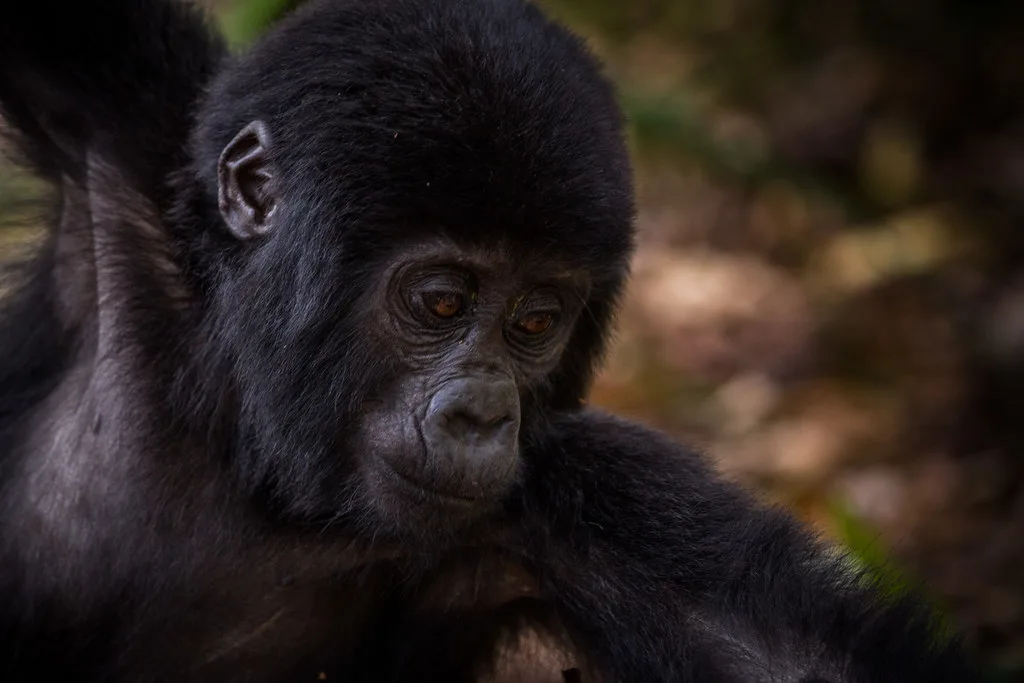

Comparing gorilla trekking and habituation experience in Uganda.
Gorilla trekking and habituation. Following previously acclimated Gorillas acquainted with human presence is known as gorilla trekking. Following semi-habituated gorillas under researcher and habituator control helps them to get acclimated to human presence.
To be regarded as a participant, you have to have a gorilla trekking permission or habituation permit from Uganda’s Wildlife Education Center.
Gorilla habituation experience is so far done in only two gorilla trekking families located in the southern part of Bwindi Impenetrable National Park. In Uganda, gorilla trekking is done in Bwindi Impenetrable National Park and Mgahinga National park with about 19 gorilla families open at the moment.
The Cost of either a habituation permit or a gorilla trekking permit.
While gorilla habituation costs $1500 per person per day, the price for gorilla trekking permits in Uganda right now is $800 per person. Booking beforehand may enable you to buy in installments as long as you top up before the day of trekking.
Other expenses related to gorilla trekking might be comparable to lodging; however, for gorilla habituation, you must reserve lodges in the southern portion of Bwindi Impenetrable National Park.
Allowance for hiking or habitation of mountain gorillas
While only a maximum of 4 visitors are permitted to perform gorilla habituation in Uganda, a maximum of 8 tourists are allowed to be in the vicinity of the mountain gorillas during gorilla trekking. This is meant to lower the number of humans living in the forest who would damage the food source for those large apes—that is, the flora.
About 300 pounds of leaves will let a full-grown mountain gorilla sustain its own weight both night and day.
Time permitted for gorilla habituation or Trekking among the mountain gorillas.
Only one hour is permitted to remain in the presence of mountain gorillas as they go about their daily routines once you find them during gorilla trekking.
You must spend four hours tracking the mountain gorillas with researchers and rangers to accomplish gorilla habituation. You help to record data about mountain gorillas with unique traits.
Starting times for gorilla trekking and habituation
Every day, gorilla trekking begins with a briefing at 07:30 hours. To be at ease seeing the mountain gorillas in the wild, you have to carry your gorilla trekking equipment.
On the other hand, gorilla habituation begins earlier—between 05:30 and 06:30 hours—to enable one to see de-nesting. You track the gorilla family all day and record their actions for historical use.
Where in Uganda is Gorilla Trekking and gorilla habituation carried out
Currently residing in Bwindi Impenetrable National Park and Mgahinga National Park are nineteen live gorilla families exposed to visitors. Two gorilla families are accessible for gorilla habituation residing in the southern portion of Bwindi Impenetrable National Park exclusively.
Other Activities to do after Gorilla Trekking In Uganda
Birding Safaris in Uganda
In Uganda, Rwanda, and D.R. Congo, the Virunga region is the main birding hotspot. Among the many birds found here are around 23 species of the 24 species of Albertine Rift endemics. The finest birding display in Bwindi Impenetrable National Park is found in the Ruhowicz region of Mubwindi Swamp.
You could find Shelley’s Crimsonwing, African Green Broadbill, Western Green Tinkerbird, Red-faced Woodland Wabers, Rwenzori Batis, Collared Apalis, and more.
Given that Bwindi Impenetrable National Park harbors around 350 bird species, skilled birders may see over 100 species when gorilla trekking.
Though the area is rarely frequented, the list of bird species found in Mgahinga National area is continually growing; currently reported numbers range from around 115.
Other Primate walks
Apart from mountain gorillas, Mgahinga National Park and the Bwindi Impenetrable National Park house additional primates. On some of the paths built by frequent users, you may see primates such as olive baboons, vervet monkeys, red-tailed monkeys, grey-cheeked mangabey, black and white colobus, and others on nature walks.
Neighborhood walks
You enjoy the life of the area, such as local brewing, farmhouse visit, traditional healer visit, and others along the tour. During the Nkuringo Community tour in southern Bwindi Impenetrable National Park, you could have the opportunity to observe a native blacksmith, rural house stead, local brewer, and more.
The Batwa path and Garama cave tour in Mgahinga National Park transports you into the lives of displaced Batwa people from their past forest living. A Mutwa leads this route under a plateau known as Garama cave. After attacking the Bafumbira farmers, the Batwa used this as a retreat place. Cultural dances are being carried out here, however, upon prior request.
Mountain climbing in Mgahinga National Park
Apart from gorilla trekking, you may spend a day hiking on one of the three volcanic mountains inside Mgahinga National Park. Mountain Sabyinyo, locally meaning old man’s teeth, is 3669 meters above or Mountain Muhavura; Mountain Gahinga whose meaning is pile of little stones, sits at 3474 meters above sea level.
For hiking any of these mountains, advance scheduling is required, as is a ranger guide to accompany you throughout the walk and return.
Other Events To Combine with Habituation and Gorilla Trekking
You may opt for wildlife drives in Uganda National parks include Queen Elizabeth National Park, Murchison Falls National Park, Lake Mburo National park and others, after seeing the mountain gorillas. It is rather remarkable to go chimpanzee trekking in Kibale National Park either before or after gorilla trekking. Highlights of the Uganda safari experience include the launch expeditions at Murchison Falls National Park and Queen Elizabeth National Park.
Safety rules for Gorilla Trekking and Habituation in Uganda
- Because the ranger guides operate with other Ugandan security authorities and surrounding security agencies to guard the region, gorilla trekking in Uganda is secure.
- Before entering the jungle to begin looking for the mountain gorillas, you must show up for early morning attendance at the briefing.
- Carrying your gorilla trekking gear provides additional bodily protection, much like wearing long-sleeved shirts and pants, safari boots, smearing insect repellent, garden gloves, and others.
- Make sure you go at the speed of other hikers to avoid becoming lost in the wilderness. Though the ranger guide moves at the slowest speed of the slowest trekkers, avoid letting the remainder of the group cross you.
- Never encourage the mountain gorillas or forest dwellers—like the monkeys—to stir around. They fluctuate in mood as well.
- Never count money in public, particularly if the amounts are big; you could draw burglars.
- Since individuals from all walks of life engage in gorilla trekking safari, carrying precious goods may not be secure.
- Buy meals from approved areas to prevent food contamination on the gorilla trekking trip.
The Difficulties of Gorilla Trekking and Habituation in Uganda
Expect to climb at times to find the mountain gorillas; the overall geography of the gorilla trekking or habituation zone is volcanic.
Even the local flora is full of twisted vines and creepers that must be cleared with a machete to create space.
Rivers overflow causes the pathways to be slick when it rains, particularly during the extreme wet seasons. You have to be ready to follow marshy route ways to discover the mountain gorillas; these monkeys sometimes eat from the slopes therefore you must trek there to spot them.
Since you may have to climb at times, some degree of fitness is required for gorilla trekking and habituation.
When Should You See The Mountain Gorillas?
Finding the mountain gorillas might take two hours or over three-quarters of the day. Though not speedy, mountain gorillas are mobile creatures. One reason a group of rangers gets up earlier than others is to hunt the mountain gorillas. They report back to park headquarters, who use it as one of the hints to pursue throughout the hunt.
This indication does not imply the gorillas will not depart where the rangers found them. They look for food, in case they are assaulted by wild gorilla families, lose a family member, and so much more.
To really appreciate the gorilla trekking experience, one must be somewhat patient. Having an open mind also helps you to stay on because the jungle offers plenty to see beyond only the sight of the mountain gorillas.
Once you find the gorillas, you need to maintain a distance of about eight meters away from them to avoid any possibility of spreading any disease. You must optimize every second to realize your ambition of seeing the mountain gorillas; just one hour is permitted to be in their company.
The Guidelines of Gorilla Trekking and Habituation
All operations carried out in the mountain gorilla habitat are aimed at the preservation of the mountain gorillas.
Although mountain gorillas are prone to human diseases, anybody with a communicable infection is not permitted to go gorilla trekking; you do not know what it will do to the now celebrated gorilla population.
Once you find the mountain gorillas, keep about eight meters away. This lowers the possibility of any virus transferring to these gorillas.
Flash photography is against usage as it disturbs the mountain gorillas.
The mountain gorillas feel attacked, hence you do not need to surround them. They may also go into the deeper parts of the forest when they get upset.
It is against policy to provoke the mountain gorillas as they are timid creatures that could get uneasy in this regard.
Eat and smoke far from the mountain gorillas; they may grab what you have, and it may not be in line with their health. One major loss is losing even one mountain gorilla due to thoughtlessness.
Should you have to cough or sneeze, avoid the mountain gorillas or cover your mouth to lower the risk of transferring infections to them.
Ask the ranger guide to dig a hole for you thirty can deep and hide all waste beyond recognition for extended calls in the forest. This is to stop anybody living in the jungle from exhuming anything.
Littering the forest is illegal as it changes the environment in which mountain gorillas find food.
Spitting on plants is not advised as it looks bad and is harmful. The ideal method is to keep the ecosystem where mountain gorillas reside as it is found.
As a COVID-19 precaution, wear a fresh mask before seeing the mountain gorillas. Even your footwear is cleaned before the trip starts.
Gorilla trekking is not permitted for anybody under fifteen years old.
Once you find the mountain gorillas, one hour is allotted.