
Bwindi Gorilla Photography Tips: The Ultimate Guide for 2026
Trekking through the ancient, mist-covered slopes of Bwindi Impenetrable National Park is a bucket-list dream for many. However, for a photographer, it is both a thrill and a significant challenge. The dense canopy of this UNESCO World Heritage site creates a beautiful but dark environment, and the subjects—magnificent mountain gorillas—possess dark fur that absorbs light. To help you return with “National Geographic” quality images, Katland Safaris has compiled these essential Bwindi gorilla photography tips. Whether you are a seasoned professional with a mirrorless setup or a hobbyist with a point-and-shoot, these strategies will ensure you capture the soul of the “Gentle Giants.”
Understanding the Challenges of Bwindi Gorilla Photography
Before we dive into the technical settings, it is important to understand the environment. Bwindi is aptly named “Impenetrable.” The forest is a vertical jungle of thick vines, ferns, and giant hardwood trees. This means you will rarely have a clear, unobstructed view with perfect sunlight.
The lighting in Bwindi is notoriously unpredictable. One moment you may be in a sun-drenched clearing, and the next, you are in deep shade under a triple-canopy forest. Furthermore, the gorillas themselves are dark. Capturing the detail in their black fur while not overexposing the bright green leaves around them requires a careful balance. These Bwindi gorilla photography tips are designed to help you navigate these specific hurdles so that your one hour with the gorillas is productive and stress-free.
Choosing the Right Camera Gear for the Rainforest
The first step to success is bringing the right tools. You don’t need the most expensive gear in the world, but you do need equipment that can handle low light and moisture.
Best Camera Bodies
A DSLR or a modern mirrorless camera is ideal because they allow you to change lenses and perform better in low light. If you are choosing a new body for 2026, look for one with excellent “Animal Eye Autofocus.” This technology is a game-changer for Bwindi gorilla photography tips, as it allows the camera to lock onto the gorilla’s eye even through thin branches.
Essential Lenses
You generally won’t need a massive 600mm lens. Because of the thick vegetation, you will likely be within 7 to 10 meters of the gorillas.
- 70-200mm f/2.8: This is the “gold standard” lens for gorilla trekking. It offers enough zoom for portraits but is wide enough to capture a mother and her baby together. The f/2.8 aperture is crucial for letting in light.
- 24-70mm f/2.8: This is perfect for “environmental portraits,” showing the gorilla within the context of the massive Bwindi forest.
- Avoid Fixed Prime Lenses: While sharp, they lack the flexibility needed when a silverback suddenly decides to move closer to you.
Support and Protection
Tripods are not allowed on treks as they are too bulky and can block the path of the gorillas or other trekkers. Instead, bring a lightweight monopod if you feel you need the extra stability. Most importantly, bring a high-quality rain cover for your camera and lens. Bwindi is a rainforest, and a sudden downpour can happen at any time.
Master Your Camera Settings for the Jungle
Technical skill is where these Bwindi gorilla photography tips truly come to life. You only have 60 minutes with the gorillas, and you don’t want to spend that time fumbling with your dials.
High ISO is Your Friend
Many photographers are afraid of “noise” or grain in their photos, but in Bwindi, you must embrace high ISO. To keep your shutter speed fast enough to prevent blur, you will likely need to set your ISO between 1600 and 6400. Modern editing software can easily remove grain later, but it cannot fix a blurry photo.
Selecting the Right Aperture
To let in the maximum amount of light, use a wide aperture (a low f-number). Shooting at f/2.8 or f/4 not only helps with exposure but also creates a beautiful “bokeh” effect. This blurs out the messy background of vines and leaves, making the gorilla “pop” out of the frame.
Shutter Speed and Focus
Gorillas might seem slow, but they move their heads and hands quickly while feeding. Keep your shutter speed at a minimum of 1/250th of a second. If the youngsters are playing, you may need to go up to 1/500th. Use “Continuous Autofocus” (AI Servo on Canon or AF-C on Nikon/Sony) to ensure the camera keeps the subject in focus as it moves.
Professional Composition Techniques
Once your settings are dialed in, you can focus on the art of the shot. Great photography is about telling a story, not just documenting an animal.
Focus on the Eyes
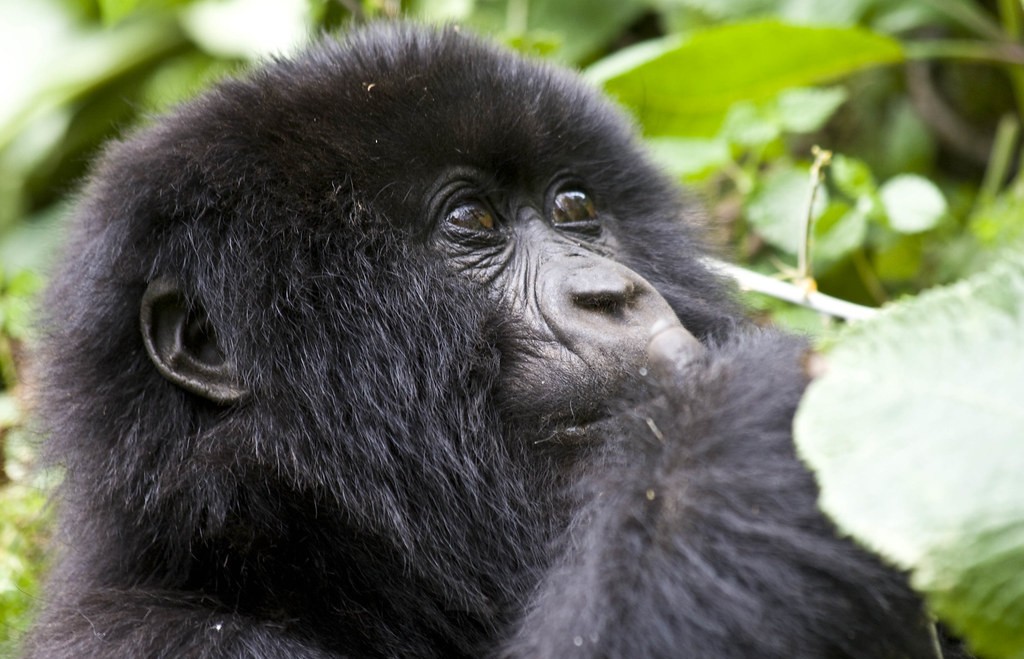
The eyes are the windows to the soul. A photo of a gorilla’s back is rarely compelling, but a sharp shot of a silverback’s amber-colored eyes creates an instant emotional connection. Always place your focus point directly on the eye closest to the camera.
Look for Transitions and Behavior
While portraits are lovely, try to capture the gorillas interacting. Look for a mother grooming her infant, a juvenile swinging from a vine, or the silverback beating his chest. These behavioral shots add depth to your portfolio.
Use the Foliage to Your Advantage
Instead of fighting the leaves, use them. Framing a gorilla through a gap in the ferns can create a “peek-a-boo” effect that emphasizes the wildness of the habitat. This technique adds a sense of depth and mystery to your Bwindi gorilla photography.
Ethical Photography and Park Rules
At Katland Safaris, we believe in “Traveling Smart and Exploring More,” which includes respecting the wildlife. Following the rules is not just for the gorillas’ safety; it actually leads to better photos because the animals remain calm.
No Flash Photography
This is the most important rule. Flash is strictly prohibited because it can blind or frighten the gorillas, potentially leading to a charge. Ensure your flash is turned off and taped down before you even start the trek.
Maintain the 7-Meter Distance
While gorillas are curious and may sometimes approach you, you must never intentionally move closer than 7 meters (about 23 feet). Respecting their space allows them to behave naturally, which results in more authentic photos.
Use the Silent Shutter
If your camera has a “Silent Shutter” or “Electronic Shutter” mode, turn it on. The constant “click-click-click” of a mechanical shutter can be distracting in the quiet of the forest. A silent camera allows you to be an unnoticed observer.
Post-Processing: Bringing Your Photos to Life
Your work isn’t finished when the trek ends. Because of the low-light conditions, your RAW files might look a bit flat or dark. Post-processing is a vital part of Bwindi gorilla photography tips.
Adjusting Exposure and Contrast
You will likely need to “lift” the shadows to see the details in the gorilla’s fur. Be careful not to overdo the contrast, as you want to maintain the natural, misty feel of the Bwindi forest.
Color Correction
The green of the forest can often cast a yellowish or greenish tint on the gorillas. Adjust your “White Balance” in post-production to ensure the skin tones and fur look natural.
Noise Reduction
Since you likely shot at a high ISO, use a noise reduction tool (like those found in Adobe Lightroom or Topaz Photo AI) to clean up the grain. Focus the sharpening on the eyes and the texture of the fur to make the image look crisp.
Preparing for the Trek with Katland Safaris
Photography in Bwindi is physically demanding. You may be hiking for two to six hours before you find the gorillas. Being physically prepared is just as important as having the right camera.
Hire a Porter
We highly recommend hiring a local porter. Not only does this support the local community, but the porter will carry your heavy camera bag, leaving you with the energy to focus on your photography. They are incredibly helpful on the steep, slippery slopes.
Dress for Success
Wear long-sleeved shirts and trousers to protect yourself from stinging nettles and insects. Gardening gloves are also a great “pro tip” for Bwindi, as they allow you to grab onto branches and vines for stability without getting stung.
Pack Extra Power
The cold, humid air of the forest can drain camera batteries faster than usual. Always carry at least two spare batteries and multiple high-speed memory cards. You don’t want to see the “Memory Card Full” message just as the silverback starts a dramatic display!
Summary of Bwindi Gorilla Photography Tips
To summarize, the secret to great Bwindi gorilla photography lies in preparation and flexibility. By using a fast lens, embracing high ISO, and focusing on the eyes, you can overcome the challenges of the dark rainforest. Remember to stay patient, respect the gorillas’ space, and enjoy the moment—sometimes the best memories are the ones you take with your heart, not just your lens.
Bwindi Impenetrable National Park offers a photographic experience unlike any other on Earth. The mist, the ancient trees, and the human-like expressions of the mountain gorillas provide endless opportunities for creativity. With these Bwindi gorilla photography tips and the expert guidance of Katland Safaris, you are ready to capture the adventure of a lifetime.