What Makes Mgahinga National Park A Unique Place For Gorilla Trekking In Africa

What Makes Mgahinga National Park A Unique Place For Gorilla Trekking In Africa?
Although the mountain gorillas are well-known to be found in Mgahinga National Park, this old wooded park offers more. Though its area is just 33 square kilometers of land, Mgahinga National Park is unique for gorilla trekking in Africa since it is a survivor of the ice age that saw many forests decimated, and here is why.
From the mountain gorillas, many of the primates rely on this woodland area. Among the primates are golden monkeys, black and white colobus, vervet monkeys, blue monkeys, grey cheeked mangabey, to name just a few.
Residents of Mgahinga National Park make up the overabundant birds includes Albertine endemics, on the Red List of IUCN. Among the most amazing species in this park are the Scarce Rwenzori Turaco, Lagden’s Bush-Shrike, Scarlet Tufted Malachite Sunbirds, and others. Undisturbed vegetation from montane woodland via bamboo zone, montane forest to Ericaceous zone accounts for this abundant bird life.
Habitat of Mountain Gorillas in Africa
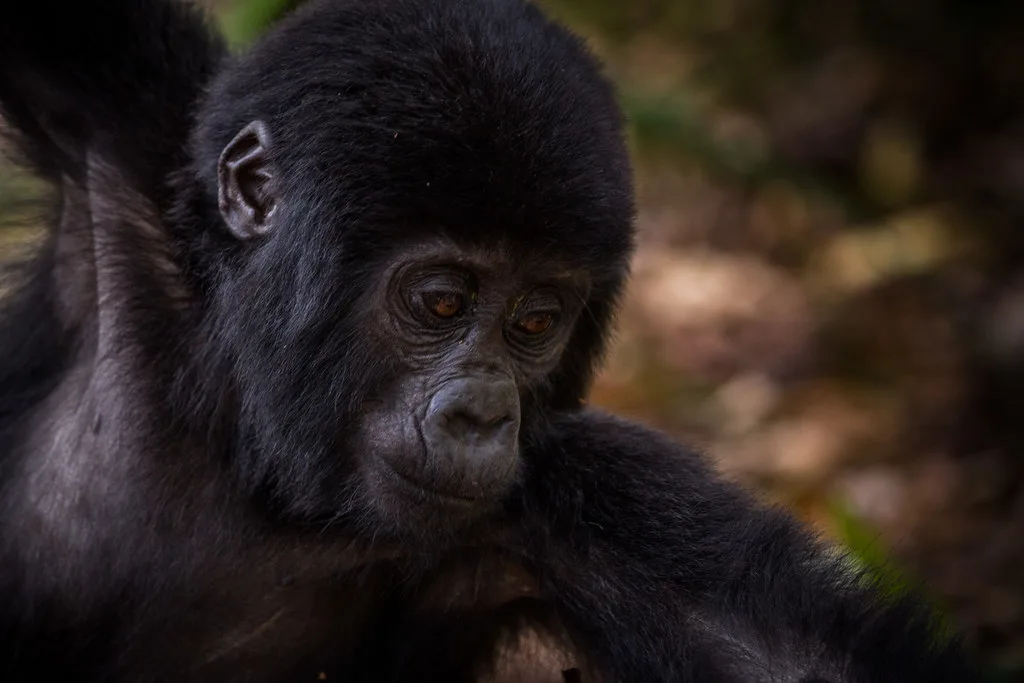
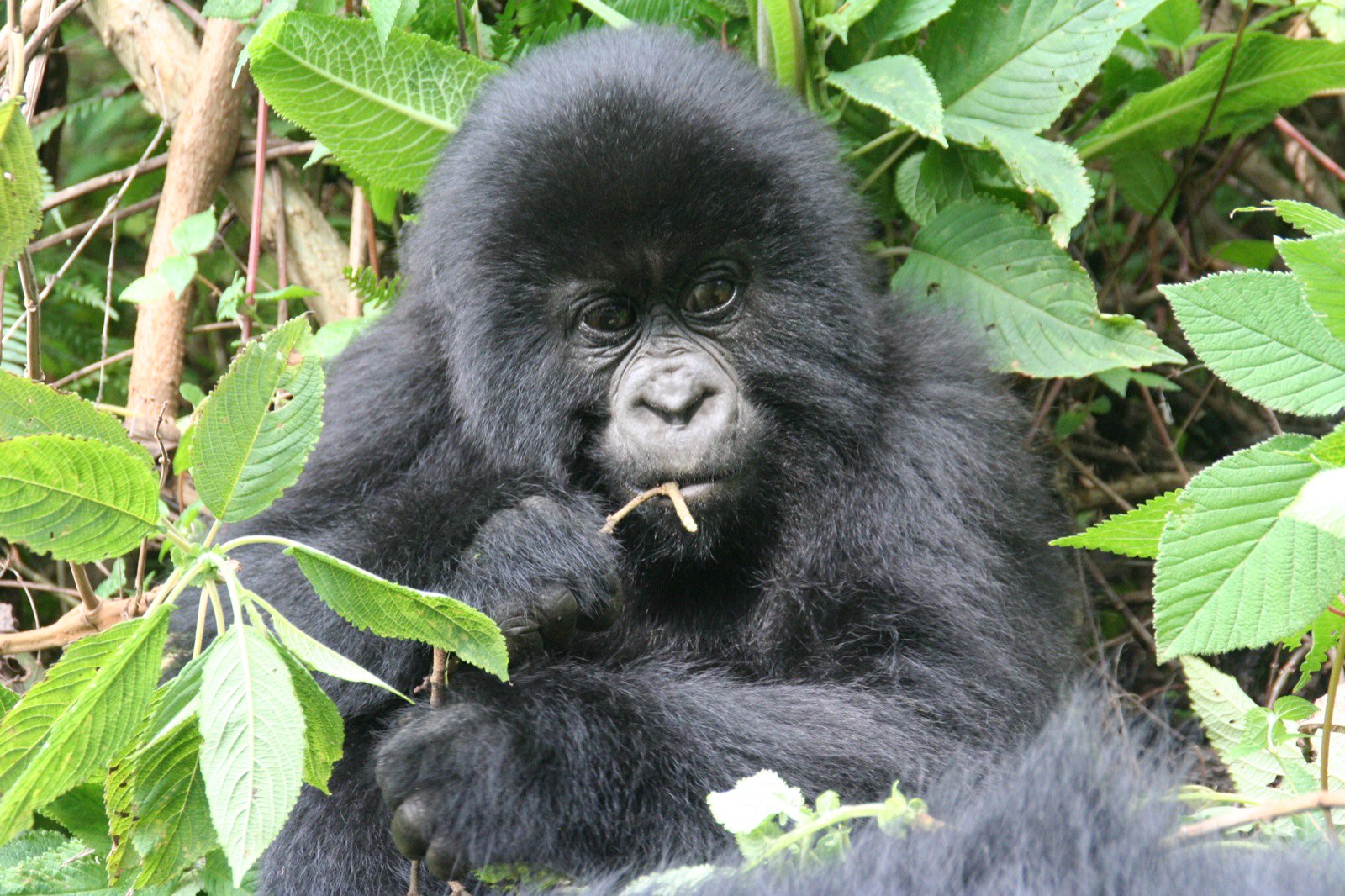
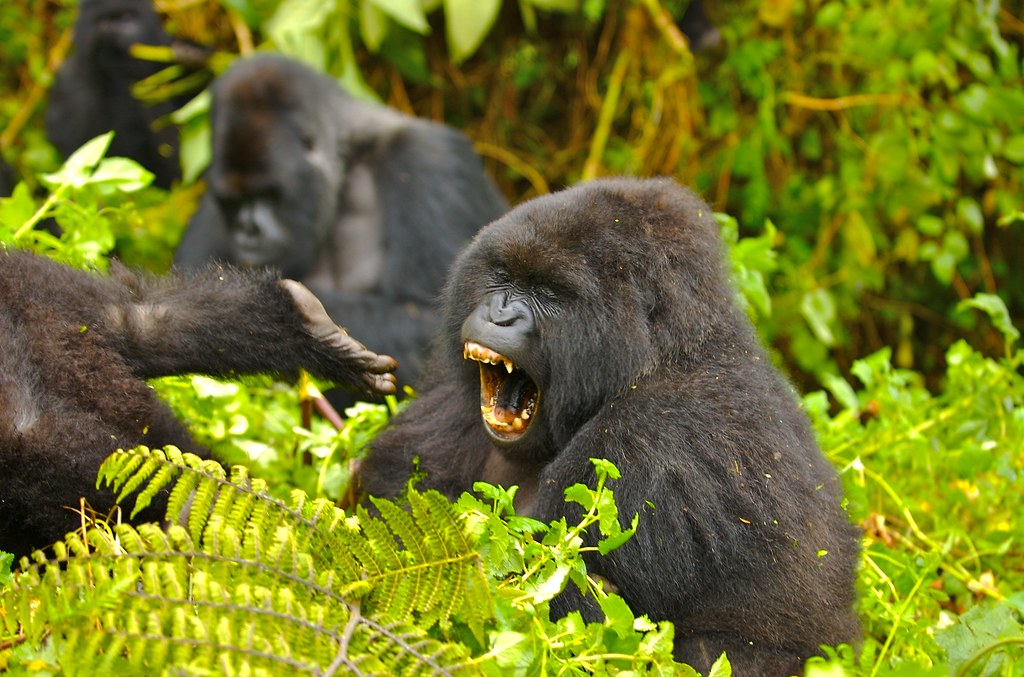
Among the well-known homes of the mountain gorillas is Mgahinga National Park. Although one gorilla family—the Nyakagezi gorilla family—is accessible for gorilla trekking right now, the experience in this park is more distant.
Sometimes this family wanders into Rwanda, so booking the gorilla permits here becomes a major issue. This family has spent some time recently living in Mgahinga National Park without crossing. The mountain gorillas do not comprehend political borders; their natural behavior is found in the forest very freely. The wilderness is not a zoo; no one is permitted to restrict their mobility to a certain place.
Paying for your gorilla trekking permit in Mgahinga National Park guarantees you will see mountain gorillas rather than having a chance. You get value for money here.
Mgahinga is a Golden Monkey Trekking Destination in Uganda | What Makes Mgahinga National Park Unique
Trekking with golden monkeys in Uganda is limited to Mgahinga National Park. Among the threatened species worldwide are the golden monkeys. Currently known to be inhabiting the Virunga region in Africa, they are a unique species of monkey.
Usually, golden monkeys have bodies bigger than those of ordinary monkeys. Different from other monkeys, their golden brown fur sets them apart. Furthermore, larger than typical monkeys are their body form.
The golden monkeys are quick in movement and fascinating to observe because of their acrobatic techniques, which seem as if they were planned for this exhibition. They have become used to living among people, yet this does not detract from their lovely character.
Among the other primates you could see are olive baboons, black and white colobus, blue monkeys, vervet monkeys, red-tailed monkeys, and L’Hoest’s grey-cheeked mangabey.
Though tiny, Mgahinga National Park is a biosphere reserve in Uganda that supports more than just mountain gorilla habitat.
Mgahinga National Park Under Scientific Investigation
Mgahinga National Park was first among the undeveloped parks in Uganda, but thanks to research, more knowledge about this wild park is now emerging. Great effort is being made by the ranger guides, park wardens, and many domestic and foreign agencies in revealing the treasures of Mgahinga National Park.
Regular updates on the forest attractions the ranger guides provide to visitors on gorilla trekking keep them current. It is well worth the effort to halt along the journey to experience such natural beauty. For this wild gorilla trekking location, one of the main reasons attending briefings is very vital.
Excellent Views at Mgahinga National Park
If you want a fantastic visit, Mgahinga National Park is well worth visiting. A selection of hikes lets one accommodate any ability. On any of the nearby mountains of the Virunga ranges, you may trek for eight hours returning trip.
Up a climb up Mountain Muhavura, you may see amazing panoramic vistas and alpine flora. The other five Virunga mountains, the rift valley, Lake Edward, and clear day Rwenzori ranges are visible.
From bamboo woodland to the rich marsh found at the crater top, hiking Gahinga Mountain, from Ntebeko, the primary administrative hub of Mgahinga National Park, this climb takes around six hours.
From one pivot, climbing Sabyinyo mountain reveals the boundaries of the three gorilla trekking countries in the world: Rwanda, Uganda, and the D.R. Congo. You go to peak 1 in the beginning, then follow a narrow ridge overlooking amazing drops into a deep valley on both sides. Then navigate through the muddy struggle to go to peak three.
Availability of Diversity in Accommodation Choice for Gorilla Trekking
To reach the briefing site on time, gorilla trekking visitors in Mgahinga National Park must sleep within or near proximity to the park. There is little competition for room overnight in the various lodges, as the park only has one gorilla family to see.
You may spend nights in Kisoro town as well and get up early to go to the Ntebeko center headquarters, some 14 kilometers south of Kisoro. It will take you around thirty minutes to reach the gate for the briefing.
Among the lodging facilities you might arrange for gorilla trekking at Mgahinga National Park are Gahinga Volcanoes Lodge, Mgahinga gorilla Triangle, Mutanda Lake Resort, Traveller’s Inn, Community Camp, Kisoro Tourist Hotel, Majambere Iwachu to name just a few.
Affordable Gorilla Trekking Permits for Mgahinga National Park
Since the mountain gorillas live without restrictions, Mgahinga National area is the most natural site of the mountain gorillas. A gorilla trek ticket for this area costs $800 per person.
Before booking this park’s gorilla trekking permits, you must find out from the Uganda Wildlife Authority if the gorillas are there. Mgahinga National Park is closer to Volcanoes National Park than Bwindi Impenetrable National Park, so comparing the cost of its gorilla trekking permit to its neighbour, Mgahinga is less expensive.
Mgahinga National Parks Designed deliberately near other national parks
From Mgahinga National Park, you may visit other parks like Queen Elizabeth National park a well-known game park where you may observe animals such as lions, herds of elephants, waterbucks, bushbucks, leopards, buffaloes, a diversity of birds, to name just a few. Starting Mgahinga National Park will allow you to do double gorilla trekking to either Cross to Volcanoes National Park in Rwanda or Bwindi Impenetrable National Park.
Not far from Mgahinga National Park is also Kibale National Park, the site of chimpanzee treks. After gorilla trekking, you should arrive there in six hours.
Possibility of Birding even on Gorilla Trekking | What Makes Mgahinga National Park Unique
Mgahinga National Park’s Albertine setting draws a range of birds to spend their time in its rich woodland. About 115 different bird species call this area home. You pass montane ecosystems, and here you may encounter Handsome Francolin, Dusky Turtle Doves, Rwenzori Turacos, Alpine Chat, Kivu Ground Thrush, Malachite Sunbird, to name but a few, on gorilla trekking and in the gorge route looping halfway up Mountain Gahinga.
Living in the montane forest, the birds have a large belt of bamboo and regenerating meadows on the lower slopes, heath and Afro-alpine moorland on the higher slopes. Although you may find many birds by following the buffalo wall route, you should be escorted by a ranger guide.
Mgahinga National Park’s bird list is still growing as it had not drawn interest from the start.
Availability of Community Visits Following Gorilla Trekking
Following a Gorilla Trekking excursion at Mgahinga National Park, one may see the Batwa pygmies, part of the world’s homeless population. To help mountain gorilla conservation, they were kicked out of the forest that served just that in the 1990s.
After gorilla walking, you may follow the Batwa route and Garama Caves tour to help with livelihood. A Mutwa guide leads you through their ancient past while in the jungle.
Starting at the foot of Muhavura Mountain, this path runs to Garama Cave. The cave is 342 meters closer to Mgahinga National Park’s Northern boundary. Originally, in the jungle, the cave was a place of return after raids on the Bafumbira farmers.
The Batwa council also sought their problems from this cave. In the early days, the Batwa lived in these rooms. This cave lately offers a venue for cultural Batwa events wherein the guests may enjoy traditional music and dancing.
Booking a Gorilla Trekking Permit for Mgahinga National Park
Sales of Gorilla permits for Mgahinga National Park follow the availability of the Nyakagezi gorilla trekking family. Sometimes, it wanders into Volcanoes National Park, as the free-range mountain gorillas have no restrictions. Only recently, the mountain gorillas have been consistently known to exist in Mgahinga National Park alone.
How To Get From Kampala to Mgahinga National Park By Road
About 540 kilometers separates Mgahinga National Park from Kampala city. Apart from enroute pauses, the journey runs around 8 hours from Kabale to Kisoro. The murram route takes two hours to reach Ntebeko gate and goes around the mountains.
Another route that can take anywhere from five to six hours is crossing from Kigali airport, then Cyanika border to Mgahinga National Park via Kisoro.
By flight
Domestic planes from Entebbe Airport or Kajjansi Air Strip travel to Kisoro Air Strip in the morning and afternoon every day. To go to your lodging, you need a transfer car.