Can mountain gorillas and lowland gorillas mate? a detailed comparison of the gentle giants.

Can Mountain Gorillas and Lowland Gorillas Mate? Exploring the Boundaries of a Great Ape Crossbreed in Africa.
Can mountain gorillas mate with lowland gorillas? The world of great apes is a very fascinating one, today filled with creatures that share a surprisingly close genetic lineage with us. Among these intelligent giants, gorillas are a source of constant wonder. When we think of gorillas, two prominent images often come to mind: the majestic mountain gorilla, surviving in the misty slopes of volcanic ranges in East Africa, and the more widely distributed lowland gorilla, navigating the dense rainforests of Central Africa.
Both gorillas are incredible examples of primate evolution, but a common question often arises: can these two distinct groups of gorillas mate and reproduce? This isn’t just a question of curiosity; it delves into the core of how species are defined, how they evolve, and the barriers that keep them distinct.
Join Katland Safaris on a detailed exploration into the genetic compatibility, reproductive biology, and ecological factors that determine whether mountain gorillas and lowland gorillas can successfully interbreed and produce offspring.
Understanding the Gorilla Lineage: A Family Tree with Distinct Branches
Before we can directly answer the question, we need to understand the relationship between mountain gorillas and lowland gorillas. Both belong to the genus Gorilla, but they are separated into distinct subspecies.
The Current Classification of Gorillas
In the past, all gorillas were often grouped into a single species. However, based on modern genetic and morphological research, scientists now generally recognize two separate species of gorillas:
- Western Gorillas (Gorilla gorilla)
- Eastern Gorillas (Gorilla beringei)
Within these two species, there are further subdivisions into subspecies.
The Western Gorilla (Gorilla gorilla) Subspecies
This is the most numerous and widely distributed species of gorilla. It includes:
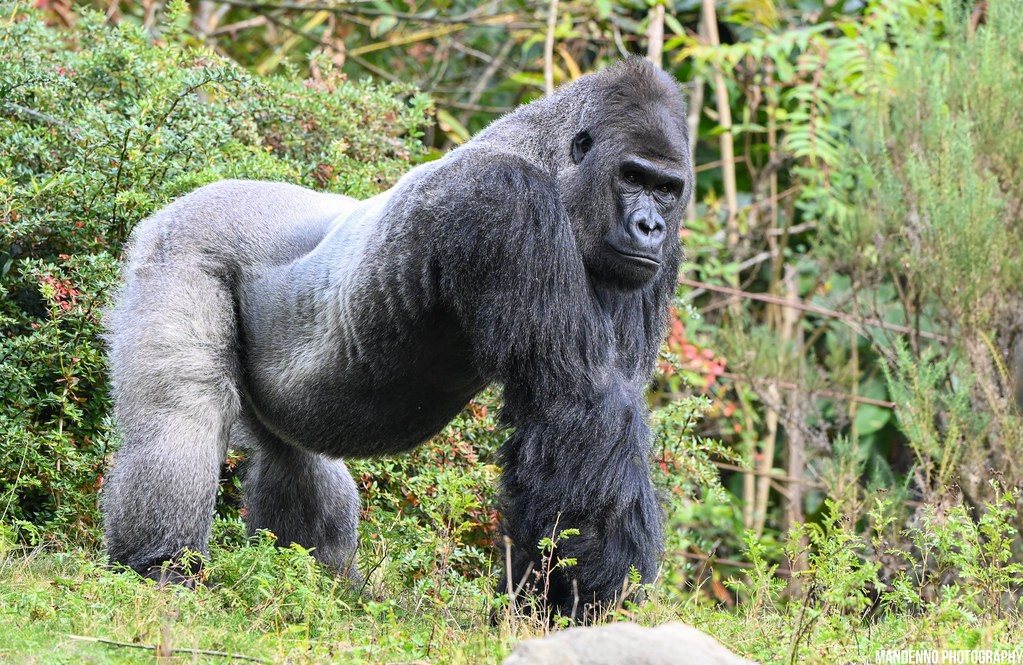
Western Lowland Gorilla (Gorilla gorilla gorilla): This is the subspecies we are most familiar with, commonly seen in zoos worldwide. They inhabit the dense rainforests and swamp forests of Cameroon, the Central African Republic, the Democratic Republic of the Congo, Equatorial Guinea, Gabon, and the Republic of the Congo.
Cross River Gorilla (Gorilla gorilla diehli): A critically endangered subspecies found in a small border region between Nigeria and Cameroon.
The Eastern Gorilla (Gorilla beringei) Subspecies
This species is restricted to the forests of East-Central Africa. It includes:
- Eastern Lowland Gorilla (Grauer’s Gorilla, Gorilla beringei graueri): Found only in the eastern part of the Democratic Republic of the Congo. They are larger than their western counterparts but share a similar rainforest habitat.
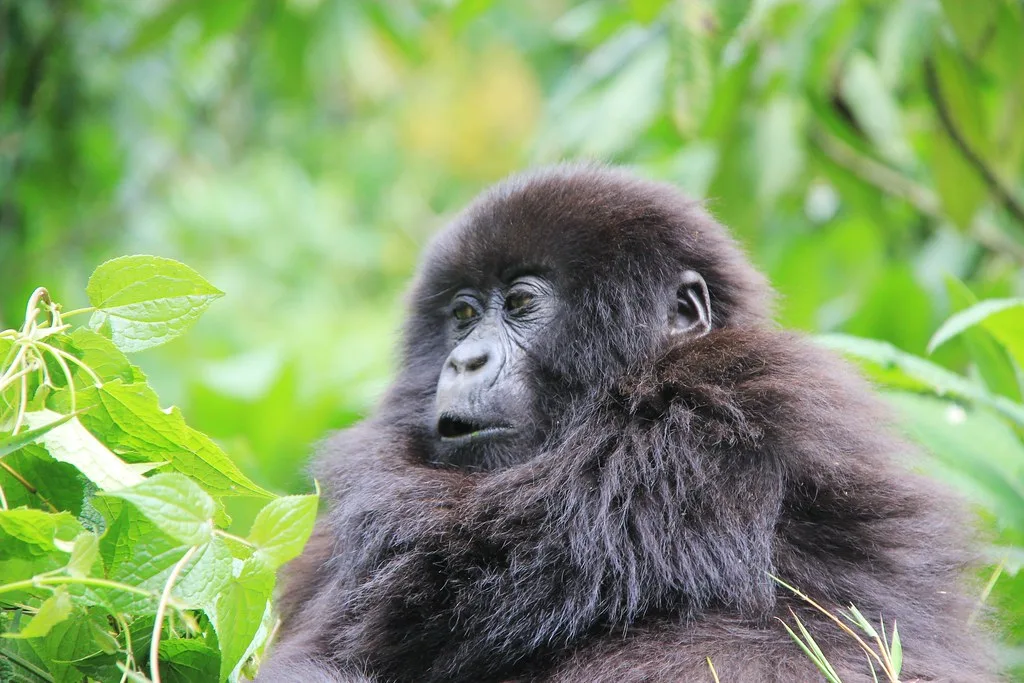
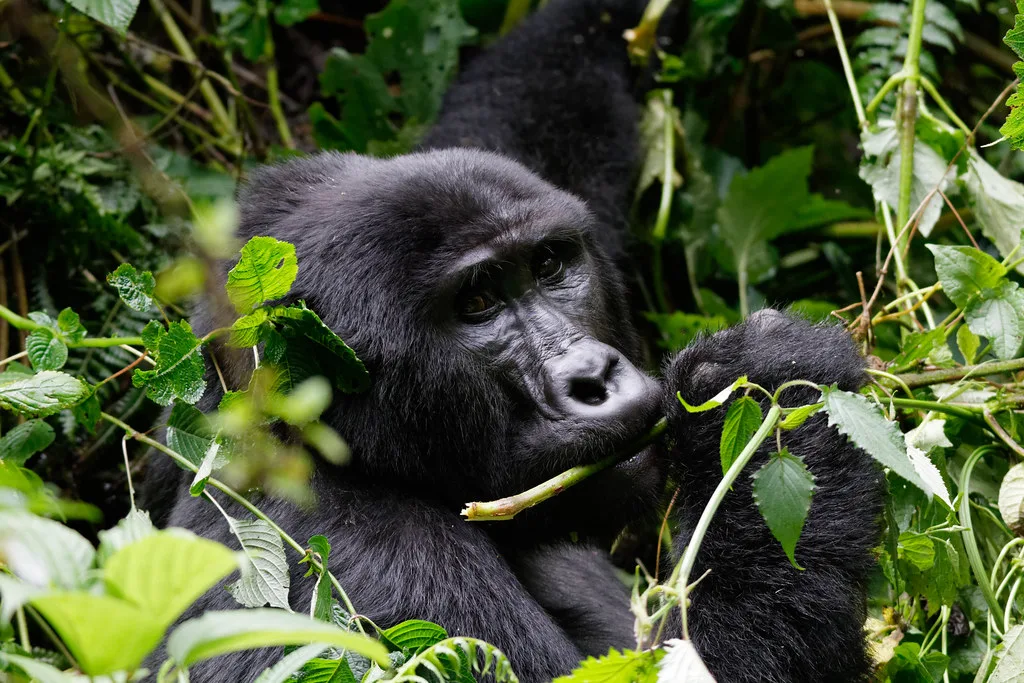
- Mountain Gorilla (Gorilla beringei beringei): This famous subspecies is found in two isolated populations: the Virunga Volcanoes region (spanning parts of Rwanda, Uganda, and the DRC) and Bwindi Impenetrable National Park in Uganda.
So, when we ask if mountain gorillas and lowland gorillas can mate, we are essentially asking two separate questions, depending on which “lowland” gorilla we’re referring to.
Can Mountain Gorillas and Eastern Lowland Gorillas (Grauer’s Gorillas) Mate?
Let’s first address the question of interbreeding between the two Eastern Gorilla subspecies: the mountain gorilla (Gorilla beringei beringei) and the Eastern Lowland Gorilla (Gorilla beringei graueri).
These two subspecies are, genetically speaking, incredibly close. They are members of the same species, Gorilla beringei.
The Scientific Verdict: Yes, it is Geographically and Genetically Feasible
If a mountain gorilla and an Eastern Lowland Gorilla were to meet and mate, there is no biological reason why they could not produce viable, fertile offspring. Their reproductive biology, gestation periods, and general physiology are extremely similar.
Why is it Possible?
Close Genetic Lineage: Being members of the same species, their DNA is highly compatible. They have the same number of chromosomes, and the fundamental blueprint of their reproductive systems is the same.
Recent Divergence: The split between mountain gorillas and Eastern Lowland Gorillas is relatively recent on an evolutionary timescale. Their distinct characteristics are largely an adaptation to different environments, but they have not diverged enough to create a biological barrier to reproduction.
Will it Ever Happen in the Wild?
While it is biologically possible, it is extremely unlikely that a mountain gorilla and an Eastern Lowland Gorilla would ever mate in the wild. The primary barrier is not genetics, but geography.
The Role of Physical Separation
The two populations are completely isolated from one another. Mountain gorillas are confined to the high-altitude forests of the Virunga Volcanoes and Bwindi Impenetrable National Park. Eastern Lowland Gorillas inhabit much lower elevation rainforests in a separate region of the DRC.
There is a vast, inhospitable expanse of land (by gorilla standards), including agricultural lands, settlements, and other human-dominated landscapes, that separates these two groups. A lone mountain gorilla would have no safe passage to travel the hundreds of kilometers required to reach a population of Eastern Lowland Gorillas.
Can Mountain Gorillas and Western Lowland Gorillas Mate?
Now, let’s turn to the more interesting comparison: the potential for mating between the mountain gorilla (Gorilla beringei beringei) and the Western Lowland Gorilla (Gorilla gorilla gorilla).
Here, we are looking at interbreeding between two different species within the same genus (Gorilla). This introduces a more complex set of biological and evolutionary questions.
The Scientific Jury is Out: Plausible, But Unproven
There is no definitive, documented instance of a mountain gorilla and a Western Lowland Gorilla mating and producing offspring in either the wild or in captivity. The main reason is that they are rarely, if ever, kept in the same facility in captivity, and as we’ll explore, they are thousands of kilometers apart in the wild.
However, based on our understanding of how closely related species can sometimes interbreed (a process called hybridization), we can explore the possibilities.
Factors That Suggest it Could Be Possible
- Genetic Closeness: Western and Eastern Gorillas are very closely related. Their split is believed to have occurred a few hundred thousand years ago—a short time in the grand scheme of evolution. They still share a high degree of genetic similarity.
- Hybridization in Other Apes: We know that hybridization is possible between relatively closely related primate species. For example, there are documented cases of interbreeding between bonobos and common chimpanzees in very specific, human-controlled environments.
Wait, Are Gorillas Different Species or a subspecies?
This is where things can get a bit muddy. The term “species” is often defined by the “Biological Species Concept,” which states that species are groups of interbreeding natural populations that are reproductively isolated from other such groups.
However, this definition isn’t always clear-cut. Sometimes, closely related but distinct groups can produce viable, but infertile, offspring (like a mule, the offspring of a horse and a donkey). In other cases, they can produce fertile offspring, challenging the “distinct species” definition.
The classification of gorillas has shifted, with most scientists now preferring to view Western and Eastern groups as distinct species due to significant differences in their morphology, ecology, and DNA.
Factors That Suggest it Might Not Be Possible (or Very Difficult)
Accumulated Genetic Differences: Over the millennia that the Western and Eastern species have been separated, significant genetic differences have accumulated. These differences could potentially lead to reproductive incompatibilities, such as:
Gametic Isolation: The sperm of one species might be unable to recognize or fertilize the egg of the other.
Zygote Mortality: If a fertilized egg (zygote) forms, it might not be able to develop properly and may die at an early stage.
Hybrid Inviability: If a hybrid infant is born, it might be weak, prone to health problems, and have a reduced chance of survival.
Hybrid Sterility: Even if a hybrid gorilla survives and reaches adulthood, it might be infertile, making it unable to contribute to the gene pool.
Physical and Behavioral Differences as Pre-Mating Barriers
Even if their biology was theoretically compatible, other barriers could prevent them from even attempting to mate:
Morphological Differences: Western Lowland Gorillas are generally smaller, have shorter hair (often with a reddish or greyish tinge on the head of adult males), and have a more distinct facial structure compared to mountain gorillas. Mountain gorillas are larger, heavier, and have much thicker, shaggier black hair to survive in their cold, high-altitude habitat. While these might seem like small differences, they could affect mate selection. A gorilla from one species might not recognize a gorilla from the other as a potential mate.
Behavioral and Vocalization Differences: Gorillas have complex social structures and communication methods. While they share many basic gorilla behaviors, there may be subtle differences in courtship rituals, vocalizations, and other social cues that have evolved over thousands of years of separation. A communication breakdown could prevent successful mating.
Why It Will Never Happen in the Wild: A Tale of Disconnected Worlds
The final and most decisive argument against mountain gorillas and Western Lowland Gorillas ever mating is, once again, geography.
The two species are separated by a massive geographical distance of approximately 1,500 to 2,000 kilometers (about 930 to 1,240 miles). They inhabit completely different parts of the African continent with no possibility of their populations ever coming into contact.
The African Rainforest Barrier
The populations are not only far apart but also separated by an immense expanse of Central African rainforest that is not contiguous and is increasingly fragmented.
Even if a lone, determined gorilla were to somehow travel the entire distance, they would face an impossible journey.
- Rivers as Obstacles: Gorillas, as a species, are notorious for their aversion to water. They do not swim, and large rivers form major geographical barriers for them. The Congo River basin, which dominates the region between the Western and Eastern gorilla ranges, is full of massive, fast-flowing rivers that are impassable to gorillas.
- Human Development: The land between these two gorilla populations is now heavily fragmented by human activities. Farming, roads, settlements, and cities form a patchwork of human-dominated landscapes that a gorilla cannot safely cross.
- Lack of Suitable Habitat: While they both live in forests, the specific types of forests and the food sources they contain vary. A gorilla adapted to one environment might not be able to find sufficient, suitable food in another to sustain itself for such a long journey.
The Bottom Line: Plausible in Theory, Impossible in Practice
In conclusion, when asking “can mountain gorillas mate with lowland gorillas?” the answer is a combination of “yes,” “maybe,” and a definitive “no,” depending on your perspective.
- Mountain Gorillas & Eastern Lowland Gorillas: Yes, they are biologically compatible as members of the same species. However, they are separated by too much distance and inhospitable land in the wild for mating to ever occur.
- Mountain Gorillas & Western Lowland Gorillas: This is scientifically plausible but unproven. They are closely related, but significant genetic, physical, and behavioral differences exist. While it could theoretically be possible (perhaps in a controlled captive setting that doesn’t currently exist), there is no evidence to support it. Crucially, they are completely isolated from one another by thousands of kilometers of impossible terrain, so it will never happen in the natural world.
The fact that these great apes are so similar, yet so distinctly separated, is a testament to the power of evolution and the role of geography in shaping life on Earth. Each gorilla subspecies is a unique and precious entity, perfectly adapted to its specific corner of Africa. At Katland Safaris, we invite you to experience the magic of these incredible creatures in their natural habitat and to help us support the conservation efforts that protect them all.