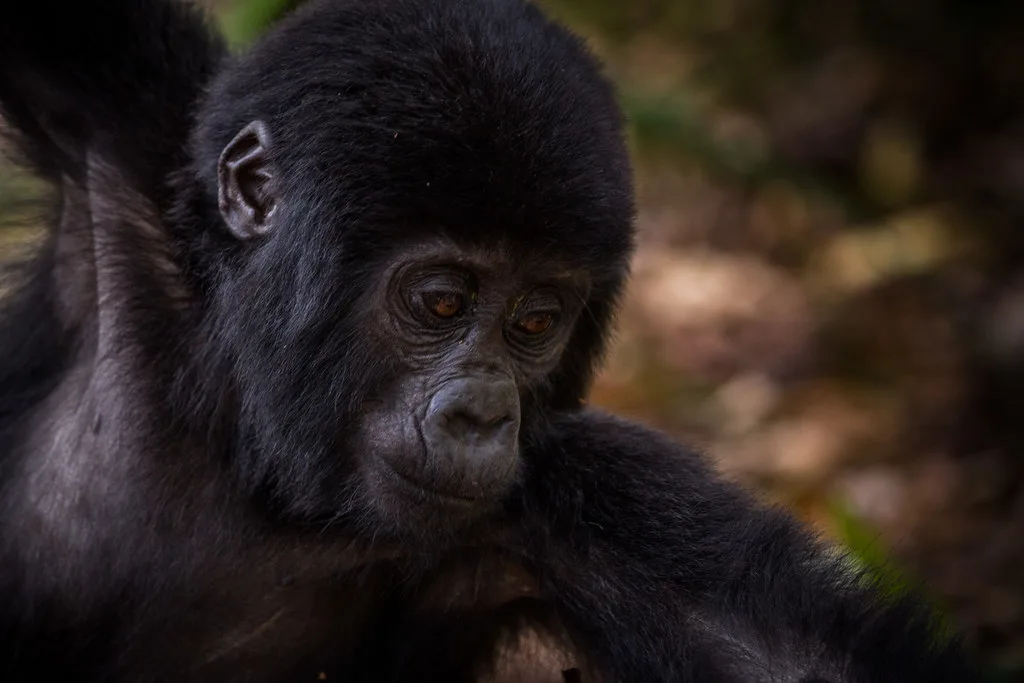

Best places to see Chimpanzees in Uganda – Budget Primate Safaris in Uganda.
Trekking Chimpanzees in Uganda. A chimpazee Trekking safari in Uganda takes you to some of the closest cousins of humans with almost 98% DNA. The wild chimpanzees are accustomed to being in the company of people at least for an hour without changing their natural nature, thereby enabling chimpanzee trekking.
Among all the habituated chimpanzees in Africa, Uganda has the biggest population of about 1500 chimpanzees in the tropical Kibale forest.
Other Uganda chimpanzee trekking sites include Kalinzu forest on the edge of Queen Elizabeth National Park, Kaniyo Pabidi Forest in Murchison Falls National Park, Bwindi Forest National Park, though not habituated, Ngamba Chimpanzee Sanctuary, and others.
You have to get a chimpanzee trekking permit from Uganda Wildlife Authority or another agency in Charge of Uganda’s ecosystems for chimpanzees. Depending on their closeness, two chimpanzee trekking sessions are scheduled, one in the morning at 08:00 hours and 15:00 hours.
Once you find the chimpanzees, just one hour is permitted in their company. This is to provide them time to do daily tasks include grooming newborns, feeding, procreating, and others.
Booking a chimpanzee habituation experience will provide you with extra time with the animals at Kibale National Park. You have to get up earlier than others and follow the rangers and researchers at dawn. The chimps are scheduled to be de-nesting between about 0530 and 0630 hours.
Where in Uganda can one see chimpanzees?
Kibale Forest National Park | Trekking Chimpanzees in Uganda
About 795 square kilometers, this tropical rain forest is located in western Uganda. Among the 13 primate species found in the forest are the chimps, black and white colobus, red-tailed monkeys, bush babies, pottos, L’Hoest’s, grey-cheeked mangabey, olive baboons, and others.
Its northern point is the wettest location, while its southern half connects Queen Elizabeth National Park with a 180-kilometer-long corridor for animal movement.
Kibale National Park has a rich birdlife, with over 325 species identified. Black bee-eaters, yellow-spotted nicator, blue-breasted kingfisher, Abyssinian ground thrush, African pitta, and others are among the birds you could see, even though the list is continually expanding.
One of the main birding sites in Kibale National Park, the Bigodi Wetland Sanctuary is situated in the Magombe Wetland. Primates like black and white colobus, chimpanzees, red-tailed monkeys, grey-cheeked mangabey, mammals including mongoose, bushbucks, forest elephants, wild forest hogs, and others might also be found here. You get a similar feeling from a stroll to Kihingani Wetland outside Sebitoli as from Magombe Wetland.
Kyambura Gorge in Queen Elizabeth National Park | Trekking Chimpanzees in Uganda
Kyambura Gorge is located at the bottom of the rift valley in Queen Elizabeth National Park. Chimpanzee trekking starts with a briefing in Kyambura Fig Tree Camp at around 08:00 hours and 14:00 hours daily. The journey takes approximately from one to 6 hours, depending on the movement of the Chimpanzees. One must be somewhat fit if one intends to climb into the valley, especially in the wet season. You also need comfortable tracking boots to let you negotiate the treacherous hills.
Kaniyo Pabidi Forest inside the National Park, Murchison Falls
You go about 8 kilometers inside the Kichubanyombo Gate of Murchison Falls National Park to reach this chimpanzee region. Under some of Uganda’s overgrown remnant mahogany trees, you have the chance to go chimpanzee trekking.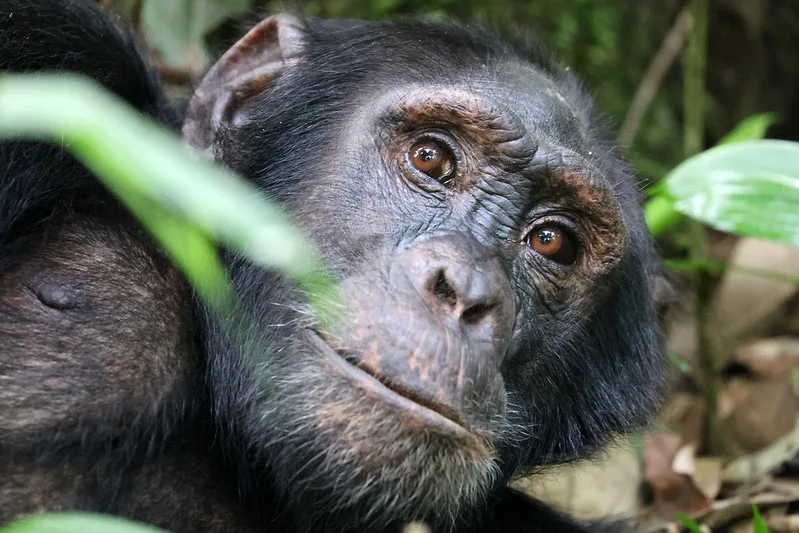
Also among Murchison Falls National Park’s top birding locations is this one. You are very likely to find birds such as Vitelline Masked Weavers, Black-headed Gonolek, Blue-capped Mousebirds, Green winged pytilias, and others.
Ngamba Island Chimpanzee Sanctuary on Lake Victoria | Trekking Chimpanzees in Uganda
This is part of the freshwater Lake Victoria, located inthe Koome Islands, 23km southwest of Entebbe, Uganda. Under Dr. Jane Goodall, the Chimpanzee Sanctuary and Wildlife Conservation Trust ( CSWCT) launched the refuge project.
Rescued, saved, homeless, and orphaned chimpanzees that cannot be restored to their natural habitats live here. It seeks to educate guests, the general public, and the local community on the importance of preserving the chimpanzees and their habitats.
You stand on the feeding platform and help distribute food while seeing the battle for fitness come to life when you visit during the feeding time.
Uganda Wildlife Education Centre ( UWEC)
Uganda is delighted to have this wild fauna summarized here. The wild creatures are housed in displays with surroundings that reflect their natural habitats. On a self-guided or guided tour at the center, some of the species you could encounter include chimps, lions, cheetahs, leopards, waterbucks, cape buffaloes, elephants, zebras, giraffes, a variety of birds,s and so much more.
Kalinzu Forest
Kalinzu Forest is situated on the edge of Queen Elizabeth National Park. While most of these chimpanzees are employed for study, opportunities for trekking them present themselves at any time.
Booking Chimpanzee Trekking Permits in Uganda
Chimpanzees permits for Kibale National Park and Kyambura Gorge are sold by Uganda’s Wildlife Authority. The caretakers of these chimpanzee sanctuaries sell the others. This helps to explain the differences in the cost of chimpanzee trekking permits all throughout the nation. Right now, the Kibale National Park chimpanzee trekking passes are $300 per person per trek.
Securing them depends on knowing the date and the number of people going for the Chimpazee Trekking. Your chimpanzee hiking permits should be bought ahead of time, as they sell quickly.
The Age Limit for Chimpanzee Trekking
The age restriction for chimpanzee trekking is fifteen years and beyond. A youngster older than this is said to be able to survive in the wild. The surroundings of the National Park have limited development a youngster at this age can go through.
Areas where chimpanzees reside have somewhat flat terrain, which facilitates travel without requiring hiking. You may find the chimpanzees by following the paths made by consistent hikers. To warn others of your existence, you can hear hoot or thumping buttress roots.
The time you spend finding the chimpanzees may not be in line with a youngster under the age of fifteen’s patience.
Sometimes the chimpanzees harass guests, which would not be appropriate for a little kid below this age. A youngster may find it uncomfortable if they reach out, touch you, or pull your hair.
Making noise is forbidden in the forest as it disturbs even other forest residents, which might be difficult for a youngster below this age to control.
Fast in mobility, chimps keep hikers on their toes. Keeping up with a youngster less than fifteen years old might be challenging.
What can a child under fifteen years do when parents go chimpanzee trekking?
Children under the age of fifteen may be scheduled for environmentally friendly activities in Kibale National Park under the direction of the child ranger instructors. Children can travel for roughly one to two hours for instructive forest hikes while parents go chimpanzee trekking in the park.
These hikes teach them about ecosystems and their occupants. Participate in environmentally friendly games, artistic projects like photography, batik creation, and pond dipping.
As you go hiking with chimpanzees in Kibale National Park, you have nothing to worry about where to put your youngster.
When should one book chimpanzee trekking permits?
Although you can travel all year round for chimpazee trekking, the best months are the peak seasons, which are in the drier months, June through October, and December through January.
Because there is much to eat during the dry seasons, chimps eat closer to the ground. Usually, the rainy seasons coincide with damp, mushy ground, which the chimpanzees find objectionable. Chimpanzees spend most of the rainy seasons remaining up in the tree branches, hence pack a pair of binoculars to get a better view.
How much is a chimpanzee trekking safari?
Among the many chimpanzee trekking programs, securing the permit is an ongoing expense.
Chimpanzee trekking permits in Kibale National Park cost $300 per person per trek. You might also schedule two sessions in the morning and afternoon.
The cost of the chimpanzee trekking permit for Kibale National park include park fees, ranger guide fees, security during chimpanzee trekking, park upkeep, chimpanzee medical fund, and others.
Twenty percent of the overall yearly income from chimpanzee trekking is returned to the nearby local communities to help with initiatives. This is one approach to include the nearby population in the protection of the chimpanzees.
Which makes the finest Chimpanzee Trekking Destination?
Although Kibale National Park in Uganda has the largest number of habituated chimpanzees, its permits are in short supply. Every troop of chimpanzees receives just six daily chimpanzee hiking permits.
Seeing some of the closest relatives of man in their natural habitat, rather than in a zoo or circus where they could be trained to perform, makes seeing the chimpanzees in the forest interesting. That thrill is unequaled wherever you go.
Every site is different on its own, depending on your desired feeling after seeing the chimpanzees. You have some difficulties finding the Kyambura Gorge chimpanzees in the wooded depression as they reside in a steeper terrain.
Kaniyo Pabidi lies within the Murchison National Park. Living amid some of Uganda’s oldest leftover mahogany trees. Along with several other primates like black and white colobus, vervet monkeys, and grey-cheeked mangabey, they share habitat with. These chimpanzees occupy the same territory as other primates in Murchison Falls.
Visitors to Ngamba Chimpanzee Sanctuary get the opportunity to see chimps up close and help feed them as well. Visitors get a better perspective of how people may co-exist with these monkeys and understand the need to preserve the environment where these apes eat.
What guidelines apply for Chimpanzee Trekking? | Trekking Chimpanzees in Uganda
Once you find the chimpanzees, keep around eight meters apart from them. These are wild creatures that may infect either you or they might spread to each other. One of the many steps you might follow is this one.
Offer to remain behind should you develop a communicable illness such as flu, cholera, coronavirus, or another illness. With their DNA ranging from around 96% to that of humans, these animals are prone to these infections.
Eat and smoke nothing before the chimpanzees; they could be tempted to seize it from you.
The chimpanzees are naturally meant to search for their own food; so, give them nothing depending on human help.
Children 15 years of age or under are not permitted to engage in chimpanzee trekking as the time of finding the chimpanzees is unclear, and they may not be able to survive in the wilderness or prolong their stay in the forest.
Never enter the forest without a park ranger; other forest users can endanger you or cause you to get lost.
Ask the ranger guide to dig a hole at least 30 cm deep and cover waste beyond awareness if you want to have a lengthy call.
It is against policy to make noise in the bush looking for chimpanzees. Unknown noise in their environments scares them.
Flash photography should never be used for chimpanzee trekking as it may frighten these amazing creatures.
Although it has never occurred in the past of chimpanzee trekking in Uganda, encouraging the chimps is illegal, as they may get aggressive. Furthermore, this is plausible.
One hour is permitted with the chimpanzees once you find them.