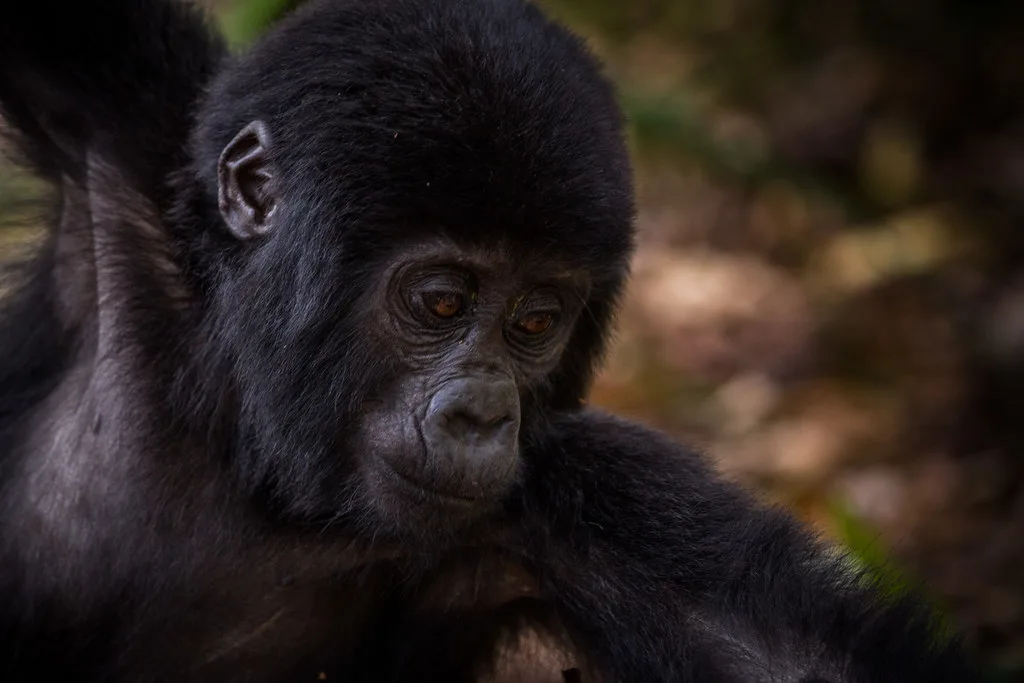

Visiting Unhabituated Mountain Gorillas In The Wilderness.
Gorillas In The Wilderness. Whether your trip is aimed at gorilla trekking or Gorilla habituation, seeing unhabituated or semi-habituated gorilla families in the wilderness might be challenging.
Mountain gorillas roam freely in the Bwindi Impenetrable National Park and Mgahinga National Park in Uganda. Mountains gorillas call Volcanoes National Park home in Rwanda, and Virunga National Park in the D.R. Congo home. The mountain gorillas are only found in the Virunga region, which consists of the above nations:
Historically, people used to greatly interfere with the existence of the wild mountain gorillas and had no relationship with them. The mountain gorillas sometimes would also invade human gardens and consume the crops there. Many mountain gorillas were slain, others abducted for entertainment, and others kept as pets.
According to Dian Fossey, all these crimes caused the great decline in the global mountain gorilla count to about 300 by the 1980s.
Allowing people to see the mountain gorillas today in a process known as gorilla trekking was one way to close the distance between humans and the mountain gorillas. Getting mountain gorillas used to seeing people without changing their natural way of life.
Both sides realize the need for co-existence as more tourists approach the wild mountain gorillas.
The mountain gorillas were on the verge of extinction in the 1980s; the International Union for Conservation of Nature (IUCN) has declared them among the most threatened species worldwide.
The populations have begun to rise as noted in every census because of the great conservation effort, both domestically and internationally, directed toward mountain gorillas.
How to handle unhabituated mountain Gorillas In The Wilderness?
Veterinary specialists, rangers, and researchers assist with the mountain gorilla habituation process. Depending on the degree of wildness the mountain gorillas are at, this procedure may take some amazing length, between three years and five years or more.
Every day, information is gathered and reorganized about the mountain gorillas. Dung is collected and sent to the labs for study; some samples include hair from past night nests.
Every family member’s unique behavior, birth count of babies, and female and male family count are recoded. Names are given to certain gorilla family members over time to provide simple identification.
To get the dominating silverback’s attention throughout this gorilla habituation process, the participants must demonstrate great respect for him.
Head of the whole gorilla family, he once approved of human presence; thereafter, the others follow, and a gorilla family is ready for gorilla trekking.
Unlike the completely habituated family visited for just one hour, a party of around 4 visitors may be permitted to see and follow the semi-habituated gorilla trekking family for approximately 4 hours.
The semi-habituated gorilla trekking family is still under study and exhibits wild behavior; so, you should follow the advice of the ranger guides and group researchers. Otherwise, you could change what has been produced so far by this group, in case you encourage or engage in any questionable activity directed towards the mountain gorillas that might raise questions.
You have to bring the correct gorilla habituation tools to get you through the whole forest. You will need a great deal of humility and patience to appreciate seeing these semi-wild mountain gorillas. Remember, they are the lords of the forest; sometimes, gorilla families with multiple silverbacks assign defensive responsibilities to these powerful males to guard the members against invaders.
The gorilla’s moodiness also fits the general conditions in the forest. You have to attend a briefing before going into the bush to go for gorilla habituation or gorilla trekking, so that you have a better idea of what you are about to come across.

Methods Dian Fossey Applied To Track Unhabituated Gorillas In The Wilderness
One way to establish visual contact with the whole family was somewhat unexpected and practically never replicated in the remainder of the census: observing an unhabituated group for forty-two minutes.
Using high-powered binoculars, Bill was able to view eight of the gorillas well enough to create their nose prints.
From their body shape and posture, they could tell the gorillas’ families, with distinct patterns of deep lines creasing the skin above their nose to distinguish unhabituated and less well-known gorillas.
When rangers and researchers got back to camp some days later, they could clearly identify four of the prints with those of three females and an adolescent from their prior group.
While seeing gorillas is interesting and personally fulfilling, the core of census work is the nest count. Rwelekana and Bill therefore turned away from the gorillas and ascended back out of the canyon to search for the morning path with fewer than three hours of light remaining.
Finding it less than a hundred meters up the ridge, they reversed southwest over a wide grassy slope and into the Kujiua Gorge. They arrived on the far rim of the nest location of the night before, little over an hour later.
Although twelve nests were counted, none had young dung, which is concerning for a group with seven adult members, most likely having four to five breeding-age females.
Bill and Rwelekana got their bags and settled into the evening’s lodging after a quick trip back to the Grand Canyon. Presumably six feet deep and no more than twenty feet long, the cave turned out to be more of a recessed ledge in the canyon side.
What Bring to See the Mountain Gorillas?
Safari Boots
The thick river network and consistent rain make the jungle harsh and wet; so, you should choose shoes that will shield your feet from such an environment.
Long slung shirts and long pants
Wearing clothing covering most of your body can help you defend yourself from stinging insects, sharp surfaces, and so much more. Packing safari convertible pants reduces the total clothing you carry.
Safari folding cap
Your head has to be protected from flying insects and water dripping from the leaves.
Medicated bug repellent
Applying an insect repellent helps you to avoid damage to your body from jungle stinging insects.
Two stocks:
You need stockings to tack in your pants and protect your body from stealthy insects that could find their way in.
Ponché or raincoat
This region gets late rainfall, hence you have to be ready in case
A pair of binoculars
You’ll need binoculars if you want to clearly see far-ranging sights.
Gloves for gardens
While going in the bush, you may inevitably find yourself clinging to creepers or falling down; yet, you must guard your hands.
Some hotels may not provide such conveniences, so you should carry your own toiletries.
Energy Dispersions
It is unknown when one returns for another meal after gorilla trekking after breakfast. You ought to carry some energizers you might eat on your way to see the mountain gorillas.
a waterproof bag
Every item you own should be packed in one bag to prevent them from becoming wet or dispersed should it rain.
Gorillas In The Wilderness